What is the function of a recirculating wet media mill in the preparation of sub-100 nanometer drug nanocrystals? Key Role
Updated 5 months ago
The recirculating wet media mill functions as a high-energy "top-down" size reduction system that converts micron-sized drug particles into sub-100 nanometer nanocrystals. By utilizing high-velocity grinding media and a continuous circulation loop, the mill generates the intense physical forces necessary to break down crystal structures. This process is critical for increasing the surface area of poorly soluble drugs, which directly improves their dissolution rates and overall bioavailability.
A recirculating wet media mill uses mechanical impact and shear forces to achieve extreme size reduction while ensuring batch uniformity. The recirculation process is the defining feature that allows for a narrow particle size distribution, preventing individual particles from escaping the high-energy grinding zone prematurely.
The Mechanism of Nano-Scale Attrition
High-Velocity Kinetic Energy
The mill operates by using an agitator shaft or rotor to drive grinding media—typically small ceramic beads—at high linear velocities. In pharmaceutical applications, these velocities often reach 12 to 14 meters per second. This high-speed rotation converts electrical energy into intense kinetic energy within the milling chamber.
Impact and Shear Forces
As the grinding media collide, they generate high-frequency impact and shear forces. These forces are powerful enough to overcome the internal lattice energy of raw drug crystals. This mechanical action physically fractures micron-sized particles until they reach the 50 to 100 nanometer range.
Use of Aqueous Suspensions
The process typically occurs in a "wet" environment, where the drug is suspended in a liquid—usually water—containing stabilizers. These stabilizers prevent the newly created nanocrystals from re-aggregating. The liquid medium also acts as a carrier to transport the particles through the grinding zone.
The Role of Recirculation in Particle Uniformity
Ensuring Statistical Homogeneity
In a recirculating mode, the drug suspension is constantly pumped from a holding tank through the milling chamber and back again. This ensures that every particle passes through the grinding zone with an equal statistical probability. The result is a nanosuspension with an exceptionally narrow particle size distribution (PSD).
Thermal Management
High-energy milling generates significant heat, which can degrade sensitive active pharmaceutical ingredients (APIs). The recirculation loop allows the suspension to pass through external heat exchangers. This continuous flow protects the drug’s chemical integrity by maintaining a stable processing temperature.
Operational Flexibility
Recirculation allows manufacturers to scale the process by simply adjusting the milling time or the number of passes. This flexibility makes it easier to achieve a specific D50 or D90 particle size target. It also allows for real-time monitoring and adjustments during the production cycle.
Understanding the Trade-offs and Challenges
Media Wear and Contamination
The intense energy required for sub-100 nm milling can lead to the erosion of the grinding beads and the milling chamber lining. This wear can introduce trace amounts of contaminants, such as zirconium or yttrium, into the drug product. Selecting high-quality, wear-resistant materials is essential to maintain pharmaceutical purity.
Energy Intensity
Achieving a sub-100 nm scale requires significantly more energy than standard micronization. As particles get smaller, the energy required to break them further increases exponentially. This makes the process time-consuming and energy-intensive, requiring precise control over power inputs.
Stability and Re-aggregation
As the specific surface area increases, the particles become thermodynamically unstable. Without the correct concentration and type of surfactants or polymers, the nanocrystals will quickly clump back together. Achieving a stable sub-100 nm suspension requires a delicate balance between mechanical force and chemical stabilization.
Making the Right Choice for Your Goal
To successfully prepare drug nanocrystals, your approach must align with the specific requirements of the API and the desired final dosage form.
- If your primary focus is Maximum Dissolution Speed: Prioritize achieving the smallest possible particle size (sub-100 nm) to maximize the surface area-to-volume ratio.
- If your primary focus is Batch Consistency: Utilize high-flow recirculation to ensure a narrow particle size distribution and eliminate "outsized" particles.
- If your primary focus is Heat-Sensitive APIs: Implement a robust external cooling system within the recirculation loop to prevent thermal degradation during high-velocity milling.
The recirculating wet media mill remains the industry standard for creating the ultra-fine drug particles necessary to bring poorly soluble modern medicines to market.
Summary Table:
| Feature | Function in Nanocrystal Preparation | Key Benefit |
|---|---|---|
| High-Velocity Grinding | Uses ceramic beads at 12-14 m/s to create impact/shear forces. | Breaks down tough drug crystal lattices to <100nm. |
| Recirculation Loop | Continuously cycles suspension through the grinding zone. | Ensures narrow particle size distribution (PSD) and homogeneity. |
| Aqueous Medium | Suspends drug particles with stabilizers during milling. | Prevents re-aggregation and ensures thermodynamic stability. |
| Thermal Management | Passes suspension through external heat exchangers. | Protects heat-sensitive APIs from degradation during high-energy milling. |
Optimize Your Nanomaterial Processing with Expert Solutions
Achieving consistent sub-100nm particle sizes requires precision engineering and the right equipment. [Company Name] provides complete laboratory sample preparation solutions for material science, specializing in high-performance powder processing and compaction equipment.
Whether you are focusing on maximizing API dissolution or ensuring batch consistency, our extensive product line supports your entire workflow:
- Advanced Milling: Planetary ball mills, jet mills, and specialized sand/bead mills for nano-scale reduction.
- Powder Processing: High-shear mixers, defoaming mixers, and vibratory/air-jet sieve shakers.
- Compaction & Forming: A full spectrum of hydraulic presses, including Cold/Warm Isostatic Presses (CIP/WIP), vacuum hot presses, and XRF pellet presses.
Ready to enhance your lab's efficiency and product bioavailability? Contact our technical team today for a tailored solution that meets your specific research or production goals!
References
- Bastian Bonhoeffer, Michael Juhnke. Numerical modelling of the dissolution of drug nanocrystals and its application to industrial product development. DOI: 10.5599/admet.1437
Mentioned Products
- Laboratory Sand Mill Grinding Dispersing Machine for Wet Particle Size Reduction
- Small Laboratory Colloid Mill for Ultra-Fine Wet Grinding and Emulsification
- Laboratory Small Horizontal Sand Mill for Nano Materials Wet Grinding
- Laboratory Disperser and Sand Mill for Grinding Dispersing Emulsifying
- Laboratory Basket Sand Mill for Wet Grinding and Dispersion of Viscous Slurries
People Also Ask
- Why is a sand mill used to process solid carbon-forming agents like PPVA and PER? Enhance Dispersion & Flame Retardancy
- What critical physical environment does a laboratory wet ball mill provide for magnetite grinding experiments? Master Precision
- Why use a planetary ball mill for ZnAl2O4 wet grinding? Achieve High-Purity & Homogeneity
- What is the function of a wet stirred media mill in drug nanosuspensions? Enhance Itraconazole Solubility & Bioavailability
- How is equipment wear and its impact on product purity assessed? Monitor Steel Media Wear in Silica Grinding via EDS

Tech Team · PowderPreparation
Last updated on May 14, 2026
Related Products
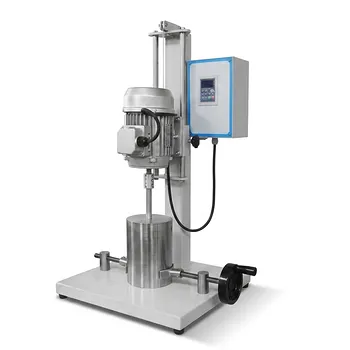
Laboratory Sand Mill Grinding Dispersing Machine for Wet Particle Size Reduction
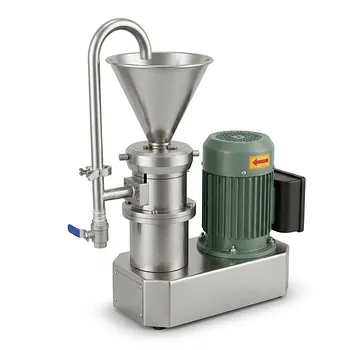
Small Laboratory Colloid Mill for Ultra-Fine Wet Grinding and Emulsification
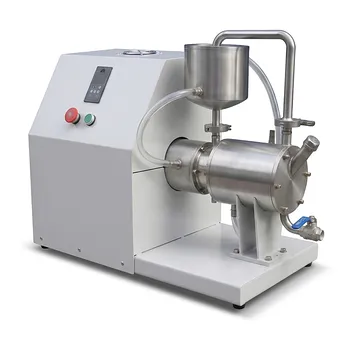
Laboratory Small Horizontal Sand Mill for Nano Materials Wet Grinding
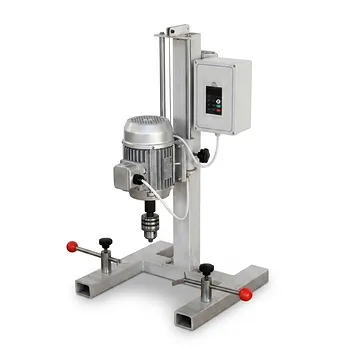
Laboratory Disperser and Sand Mill for Grinding Dispersing Emulsifying
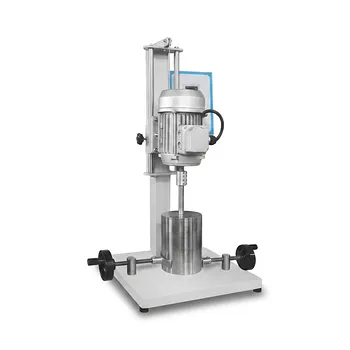
Laboratory Basket Sand Mill for Wet Grinding and Dispersion of Viscous Slurries
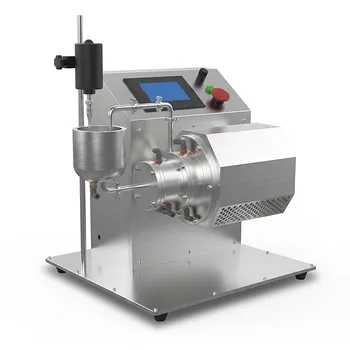
Laboratory Horizontal Pin Nano Sand Mill
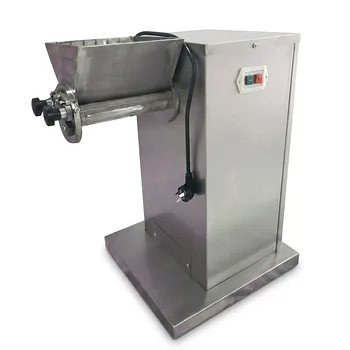
Small Laboratory Oscillating Granulator for Wet and Dry Granulation Processing

Vertical Square Planetary Ball Mill for Laboratory Sample Preparation and Nanoscale Grinding
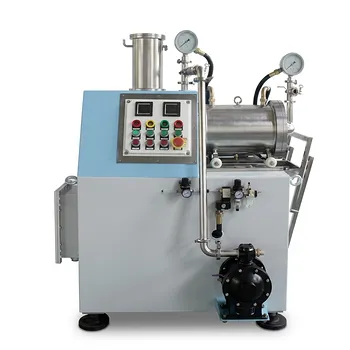
Horizontal Bead Mill for Nanoscale Grinding and Advanced Material Powder Processing