The Micron-Level Ballet: How Two-Stage Grinding Transforms Biochar into Wood’s Deepest Ally
Jun 18, 2026
The Lump That Wouldn’t Fit
You have a bag of commercial biochar. It looks like crushed charcoal — chunky, irregular, promising. You want it inside wood. Not on it. Inside the microscopic channels that give timber its strength, its water pathways, its soul. You imagine the biochar particles flowing like a liquid, perfusing every capillary void, and turning ordinary pine into something engineered, something better.
Then you look at the particle size. Your biochar pieces are measured in millimeters. The wood’s transport pores are measured in micrometers — often below 10 µm. You face a geometry problem, and geometry does not negotiate.
The path from bulk biochar to a functional wood filler is not a single grinding event. It’s a carefully choreographed two-stage reduction. Skipping the intermediate step feels efficient. It’s not. It’s the most common reason projects fail.
Why Single-Stage Grinding Lies to You
The illusion of speed
Put a 3 mm biochar granule into a planetary ball mill and run it for 12 hours. You’ll get fine powder. You’ll also get a wide particle size distribution, a significant fraction of over-milled amorphous carbon, and a machine that consumed twice the energy it should have.
Single-stage ultra-fine grinding breaks one of Morgan Housel’s core psychological principles: it pretends that a complex, high-entropy process can be conquered by force alone. In reality, fine mills work best when you feed them a consistent, pre-reduced feed. You feed them chaos, they give you chaos — just smaller.
The surface-area paradox
Biochar’s magic as a wood filler lies in its specific surface area. Crush it too aggressively, and you collapse pore structures that took pyrolysis to build. Crush it too little, and the particles never reach the intimate interface with wood cell walls you need for meaningful property transfer. Two-stage grinding resolves this paradox: the first stage does volumetric reduction with minimal surface damage; the second stage does surface-area amplification with control.
Stage One: From Lump to Flowable Powder
The job of a jaw crusher
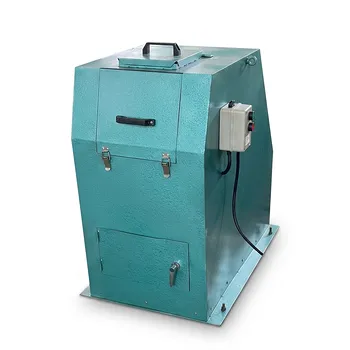
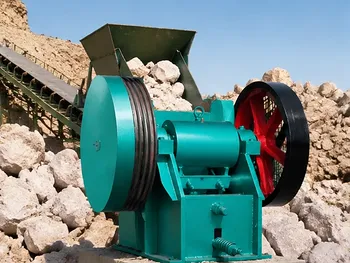
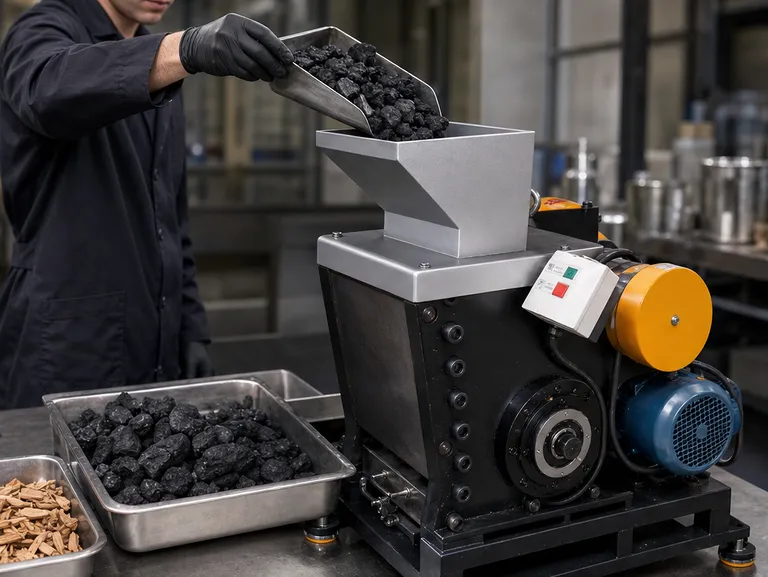
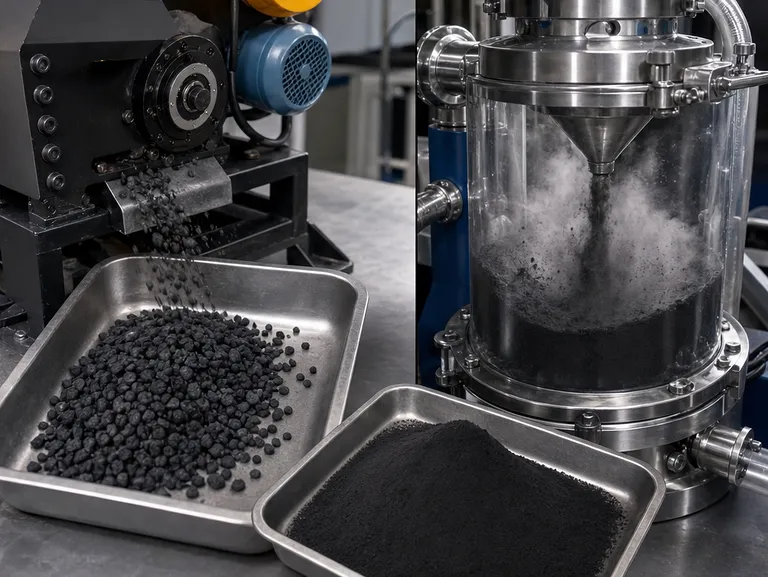
Commercial biochar arrives as irregular chunks, sometimes a few centimeters across. The first mission is efficient volumetric reduction — turning a solid that won’t flow into a coarse powder that will. This is where a laboratory jaw crusher or roll crusher shines.
Jaw crushers apply compression fracture, which tends to preserve internal porosity better than high-impact methods. They produce a product in the 1–5 mm range, ideal as feed for the next stage. They are also brutally simple machines — fewer parts to clean, fewer places for moisture-induced bridging to hide — which matters when you’re processing carbonaceous materials that love to adsorb humidity.
The psychology of the first step
Researchers often underestimate this stage. They see it as mere preparation, not as part of the quality chain. But every flaw in the coarse powder — every oversized shard, every distribution skew — gets faithfully reproduced and magnified in the fine powder. Respect the first grind, and the second becomes predictable. Ignore it, and you’ll spend hours diagnosing why your jet mill keeps clogging.
Stage Two: The Precision Chase to Microns
Moving beyond “fine enough”
Wood modification isn’t about average particle size. It’s about the tail of the distribution — the largest particles. A single 50 µm particle can block a 15 µm pit opening in the wood’s bordered pit membrane, acting like a cork in a bottle. The entire batch’s penetration efficiency crashes.
This is why fine grinding must be paired with in-line classification. A fluidized bed jet mill or a high-energy planetary ball mill with a ring sieve limits the upper particle size absolutely. You decide the cutoff — often 20 µm or less for deep structural infusion — and the mill ensures nothing larger exits.
Jet mills and the cold truth
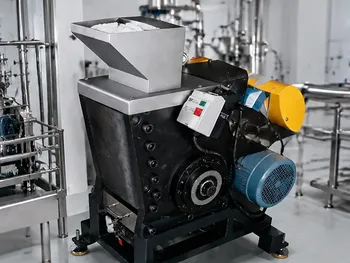
Jet mills use high-velocity gas streams to accelerate particles into each other, creating micron-level powders without mechanical contact. This means no media contamination, minimal heat buildup, and excellent preservation of the biochar’s surface chemistry. For biochars rich in functional groups — oxygen-containing moieties that bond to wood lignin — thermal degradation is a silent killer. Jet milling keeps the chemistry intact.
Planetary ball mills offer an alternative when you need batch flexibility or higher throughput per cycle. With optimized ball-to-powder ratios and sieving rings of 0.5 mm or smaller, they can routinely hit D90 values below 10 µm. The choice between jet and planetary is a conversation about volume, risk of contamination, and desired particle shape — but both demand the two-stage foundation.
The Sieve Shaker’s Unsung Heroism
Between the stages and after the final grind, classification is non-negotiable. A vibratory sieve shaker or an air-jet sieve shaker with precision test sieves does more than measure size. It creates boundaries.
For biochar fillers, target sieve meshes often land in the 20–75 µm range. An air-jet sieve is particularly effective at de-agglomerating the fine particles and presenting a true cut — something mechanical tapping can fail to achieve with sticky, micron-level powders. Oversize particles go back to the mill. Undersize goes forward. It’s a feedback loop that keeps the entire process honest.
The Trade-offs You Must Manage
Energy and cost
Fine grinding to 10 µm requires an order of magnitude more energy than crushing to 1 mm. A two-stage approach is inherently more energy-efficient than a direct single-stage slog, but it still adds operational cost. The key metric to watch is specific energy per square meter of new surface created — not per kilogram.
Dust and containment
Micron-level biochar becomes airborne easily, and it’s a respiratory hazard. The equipment must integrate with effective dust collection — cyclones, filter bags, or HEPA units — and the operator must understand that safety isn’t optional. It’s built into the process from day one.
Over-processing risk
There is a point where biochar becomes so fine that its structural contribution to wood composites diminishes — particles too small to bridge micro-cracks, too fine to reinforce. The art is to stop at the functional optimum, not at the extreme capability of your mill. That optimum varies with wood species, modification chemical, and application goal. Two-stage grinding with sieve control lets you walk up to that line without crossing it by accident.
Equipment Mapping: A Decision Table
| Process Stage | Equipment Type | Target Particle Size | Key Benefit for Biochar-Wood Systems |
|---|---|---|---|
| Stage 1: Crude Reduction | Jaw Crusher / Roll Crusher | 1–5 mm coarse powder | Efficient volumetric breakdown without collapsing internal porosity |
| Stage 2: Fine Grinding | Planetary Ball Mill / Jet Mill (fluidized bed) | D90 < 10–20 µm | Enables deep penetration into wood pit pores and cell wall nano-crevices |
| Stage 2 (alternative) | Disc Mill / Rotor Mill | < 100 µm (for surface coating) | Lower-cost route when extreme fineness is not required |
| Classification | Air-Jet Sieve Shaker / Vibratory Sieve Shaker | Tight upper limit (e.g., 20 µm mesh) | Removes oversize clogs, ensures batch uniformity, feeds back over-milled material |
| Ancillary | Powder Mixer / Defoaming Mixer | — | Produces homogeneous filler masterbatch before wood infusion |
Bringing It into Your Lab
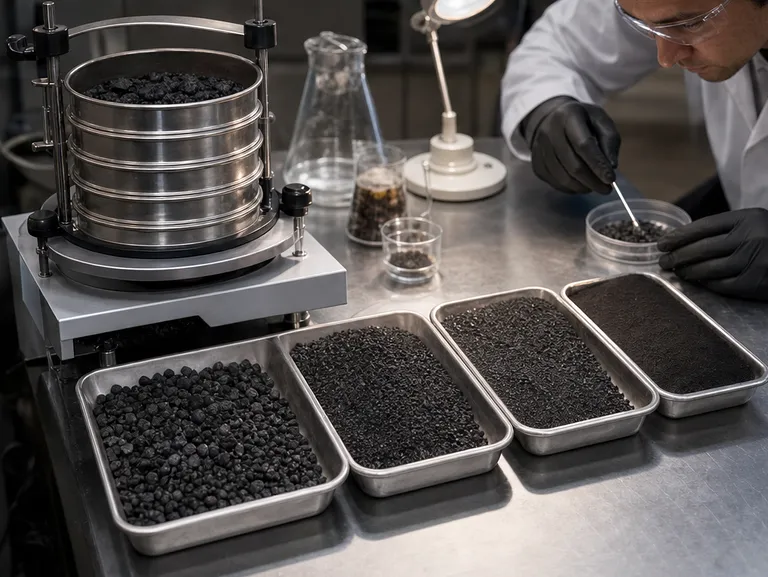
A complete laboratory sample preparation solution for biochar fillers isn’t a single machine. It’s a chain of deliberate choices: jaw crusher, jet mill or planetary ball mill, sieve shaker, and — when you later formulate — a mixer and perhaps a vacuum hot press for composite testing.
You may also find parallels in other material science workflows. The same two-stage logic applies when you process ceramics before cold isostatic pressing, or catalyst powders before XRF pellet formation. The product line that supports biochar crushing today will serve your powder metallurgy project tomorrow.
The Romantic Point of the Engineer
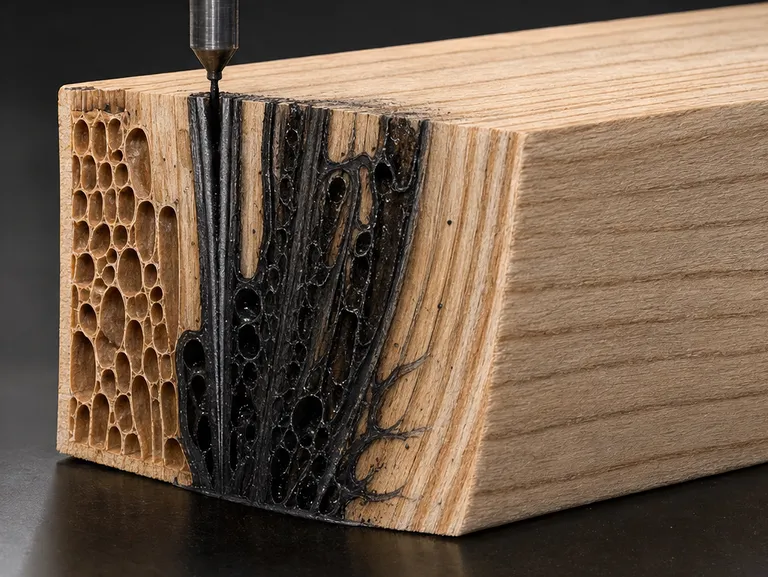
There is something quietly magnificent about feeding a rough, carbonized lump into a crusher and, two stages later, holding a powder so fine it vanishes into wood like ink into paper. The particles are too small to see individually, but collectively they re-engineer the wood’s mechanical response, its moisture buffering, its thermal signature. The machine didn’t just grind — it opened a path. That’s the poetry.
If you are standing in front of a bag of biochar wondering where to begin, start with the geometry. Give it a jaw crusher that respects its porosity. Give it a jet mill that preserves its chemistry. Give it a sieve that enforces discipline. The wood will do the rest.
When you’re ready to configure your own two-stage biochar grinding work-flow — or to explore the full range of laboratory crushers, mills, sieve shakers, and hydraulic presses for material science — Contact Our Experts for a technical consultation tailored to your specific filler and wood-modification targets.
Quick Links
Suggested Products
Heavy Duty Industrial Jaw Crusher for Primary Ore Crushing and High Capacity Mineral Material Size Reduction 150x250mm Laboratory Jaw Crusher for Medium Hard Material Crushing and Sample Preparation Heavy-Duty Jaw Crusher for Medium-Hard Ore and Industrial Mineral Crushing 150×125mm Laboratory Jaw Crusher for Medium and Fine Crushing of Brittle Materials 250x400 Jaw Crusher for Primary Crushing of Ores and Bulk Materials
PowderPreparation
Last updated on May 15, 2026
Related Products
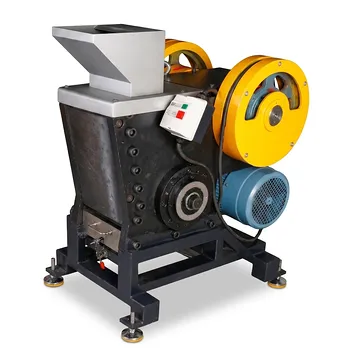
Heavy Duty Industrial Jaw Crusher for Primary Ore Crushing and High Capacity Mineral Material Size Reduction
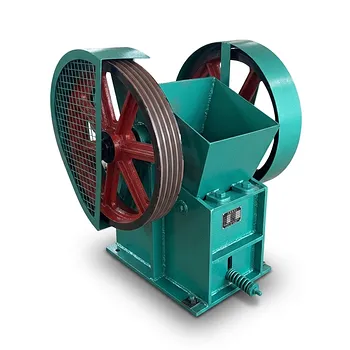
150x250mm Laboratory Jaw Crusher for Medium Hard Material Crushing and Sample Preparation
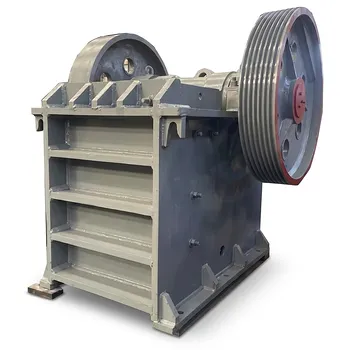
Heavy-Duty Jaw Crusher for Medium-Hard Ore and Industrial Mineral Crushing
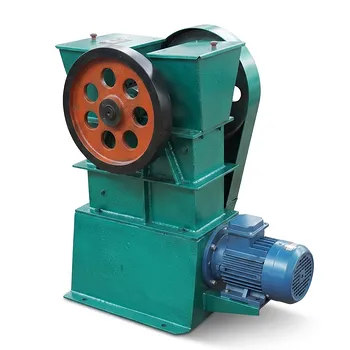
150×125mm Laboratory Jaw Crusher for Medium and Fine Crushing of Brittle Materials
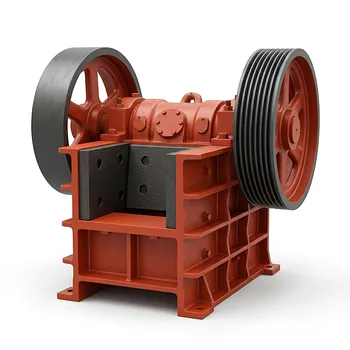
250x400 Jaw Crusher for Primary Crushing of Ores and Bulk Materials
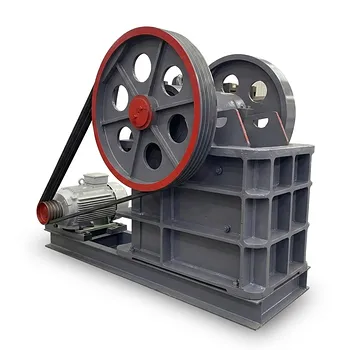
250x400mm Jaw Crusher Medium Crushing Equipment for Mining Mineral Sample Preparation
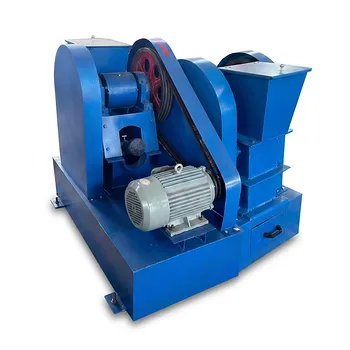
Horizontal Jaw Crusher Medium Hard Material Crushing Laboratory Sample Preparation Equipment
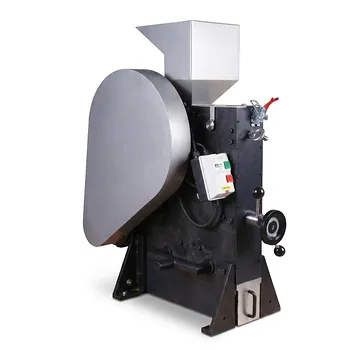
Heavy Duty Industrial Laboratory Jaw Crusher for Primary Sample Preparation and Hard Material Size Reduction
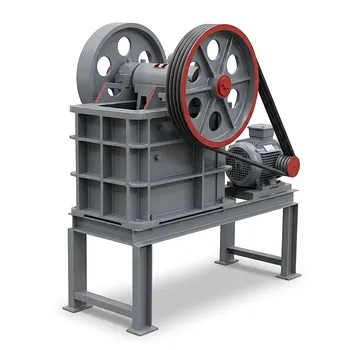
Laboratory Jaw Crusher 200x300mm Opening for Primary Crushing of Ores and Aggregates
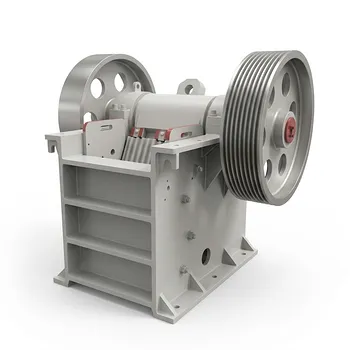
Jaw Crusher with 400x600mm Feed Opening for Primary Rock Crushing in Mining and Construction
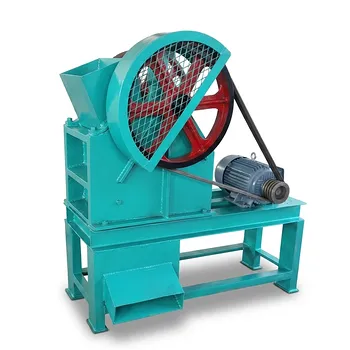
150x250mm Custom Laboratory Jaw Crusher for Coal Ore Mineral Crushing
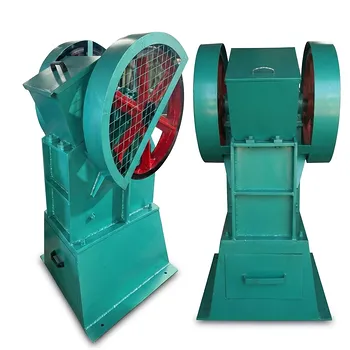
Sealed Jaw Crusher for Laboratory Material Crushing and Sample Preparation
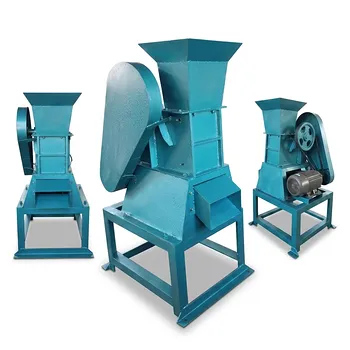
Custom Raised Height Laboratory Jaw Crusher for Precision Sample Preparation in Material Science
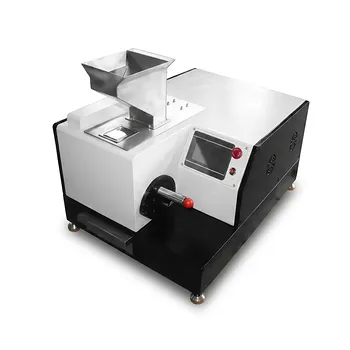
Experimental Jaw Crusher for Laboratory Ore Crushing and Sample Preparation
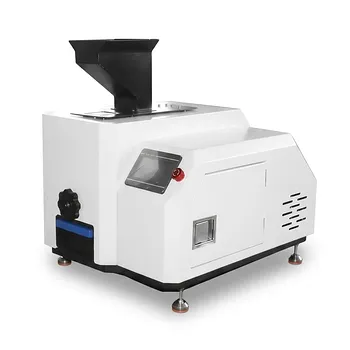
Laboratory Jaw Crusher 2025 Model for Ore and Brittle Material Crushing
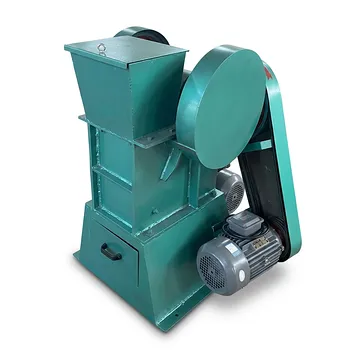
Small Laboratory Jaw Crusher 150x200mm Feed Opening for Sample Preparation and Medium Fine Crushing
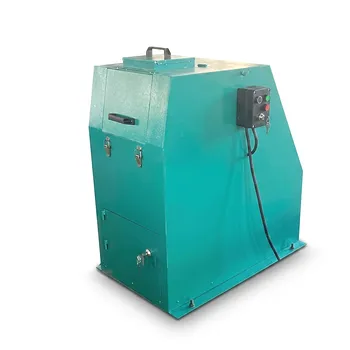
Environmentally Friendly Sealed Jaw Crusher for Laboratory Sample Preparation
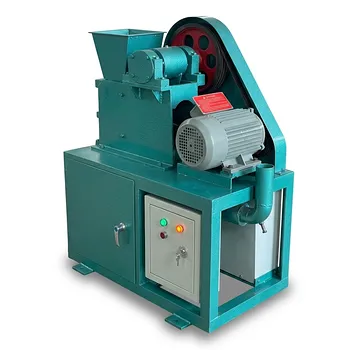
EP-B Type Sealed Jaw Crusher for Laboratory Sample Preparation
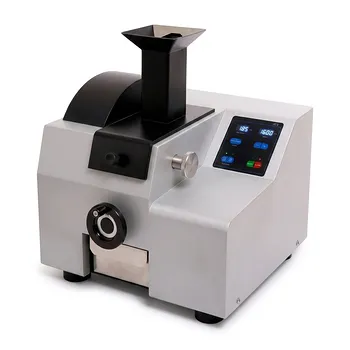
Laboratory Benchtop Jaw Crusher for Hard Brittle Materials Primary Size Reduction and Sample Preparation