The Liberation Paradox: Why Your Feldspar Needs Two Minds to Think Clearly
Jun 02, 2026
The Observer in Front of the Ore Pile
You are standing before a ton of raw feldspar. Your goal is purity. Your instinct is to squeeze harder, grind finer, blast through the rock with whatever machine you have. It’s the same instinct that makes an investor double down on a losing stock or a doctor order one more unnecessary scan: when we want control, we tend to over-apply force.
But feldspar doesn’t reward force. It rewards sequence. The mineral grains you need to liberate—the ones locked inside quartz and mica—are not randomly scattered. They sit inside a structure that needs to be peeled in layers, not shattered all at once.
This is where a very specific piece of engineering psychology emerges. A jaw crusher and a cone crusher, placed in series, do not simply break rocks. They make a decision in two stages. And that changes everything.
The Two-Stage Mind of Crushing
The Jaw Crusher: System 1 Thinking
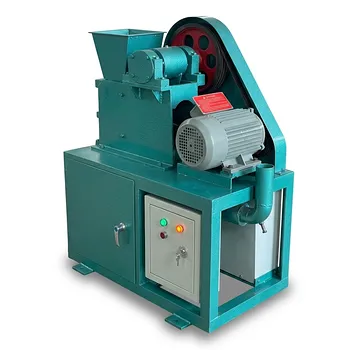
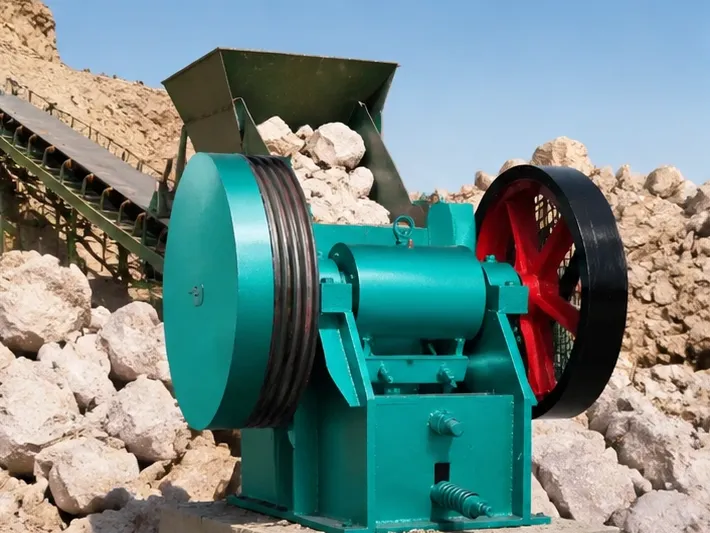
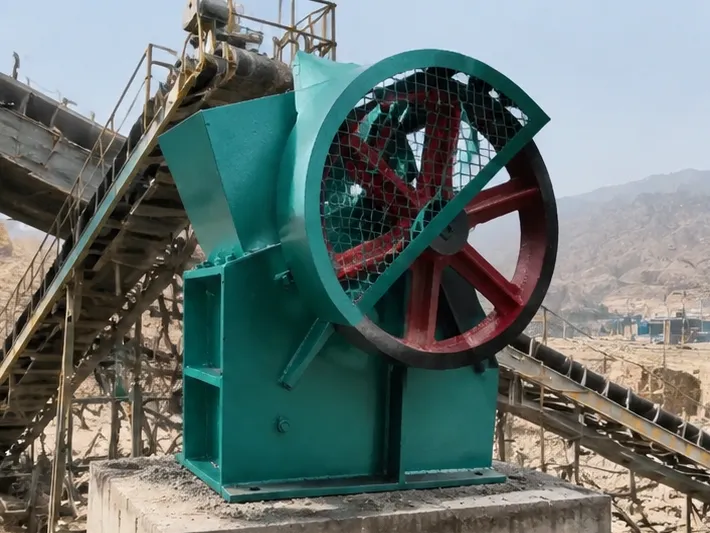
Think of the jaw crusher as your fast, intuitive brain. It sees a large, irregular boulder and without hesitation applies massive compressive force between a fixed and a moving plate. It’s the gatekeeper. Its job is volume reduction—turning chaos into something manageable, below roughly one inch.
This stage is not about finesse. It’s about giving the next machine a fighting chance. Without this brute-force opening move, a secondary crusher would choke, wear unevenly, and waste energy trying to do a job it wasn’t built for.
The Cone Crusher: System 2 Thinking
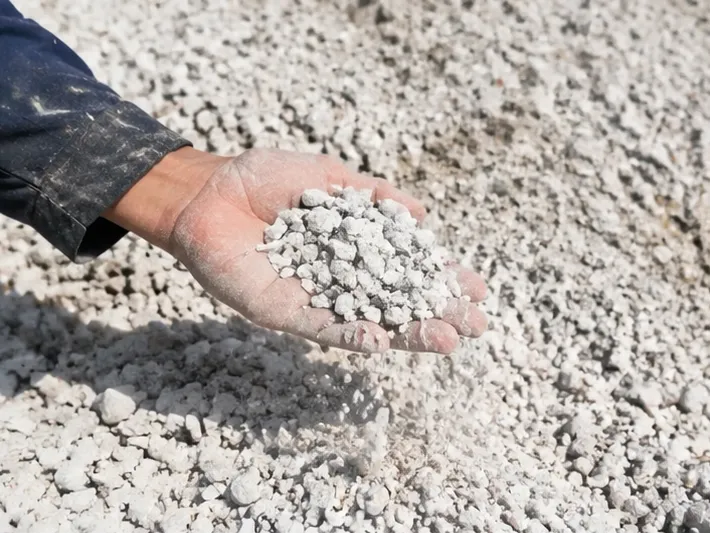
The cone crusher is the slow, deliberate, analytical mind. It receives the rough output from the jaw crusher and uses a gyrating mantle inside a concave bowl to refine particle after particle. It doesn’t just shrink rocks; it shapes them. It aims for a narrow, uniform size distribution—often below 3 millimeters for feldspar circuits.
This is the stage where the mineral begins to reveal its secrets. By applying controlled, repetitive stress, the cone crusher exploits microfractures along grain boundaries. It liberates without pulverizing. That distinction is everything.
Why One Stage Is a Trap
The Over-Pulverization Fallacy
When you try to do everything with a single machine, you commit the error of over-optimization. To get the coarse rocks small enough, you set the gap too tight. The result is a cloud of ultra-fine dust that cannot be separated effectively by gravity or flotation. You’ve turned valuable ore into unrecoverable slime.
This is a psychological pattern. Facing a complex purification problem, we crave a one-step solution. But feldspar’s value lies in its interfaces—the boundaries where it meets gangue. A single devastating blow destroys those interfaces. A two-step conversation preserves them.
The Homogeneity Imperative
Industrial mineral processing and laboratory sample preparation share one unbreakable rule: your output must represent your ore body. A combined jaw-cone circuit creates a uniform starting material. That uniformity ensures that a small sample you chemically analyze actually speaks for the 100 tons it came from.
Without it, your purity assays are fiction.
The Hidden Economics of Staged Reduction
There is another layer. Crushing is, counterintuitively, cheaper than grinding. The energy required to break a particle by compression (jaw and cone crushers) is an order of magnitude lower than the energy to reduce it further in a ball mill. By letting the cone crusher take the ore down to its finest crushable size, you offload work from the mill. You save money and reduce heat-induced mineral damage.
This is the engineer’s version of the saying: “Slow is smooth, and smooth is fast.” The two-crusher combination is the slow, smooth path to a fast, profitable purification process.
Navigating the Trade-offs
The path is not without forks.
The Gap Calibration Dilemma
Set the jaw crusher’s discharge too wide, and the cone crusher struggles. Set it too narrow, and you bottleneck the entire circuit. The relationship is intimate. In a well-tuned system, the output of one machine is the perfect mouthful for the next.
Maintenance and Inventory Complexity
Two machines mean two sets of wear parts. Jaw plates and cone mantles both need regular attention. The temptation is to ignore this and run both until failure. But the real cost isn’t the spare parts; it’s the downtime when a worn part degrades your carefully calibrated particle size distribution.
How to Apply This to Your Project
Your decision matrix might look like this:
- If you value throughput above all: Match discharge and intake sizes precisely. A jaw crusher feeding a cone crusher is a relay race—the baton pass is everything.
- If you value mineral liberation: Prioritize the cone crusher’s closed-side setting. You want the rock to break along grain boundaries, not through crystals. That requires a gentle final touch.
- If you want to cut downstream grinding costs: Push the cone crusher to its lowest practical output. Every millimeter you shave off in the crushing stage is a kilowatt-hour you don’t spend in the mill.
| Stage | Equipment | Primary Function | Output Target |
|---|---|---|---|
| Primary Crushing | Jaw Crusher | Coarse volume reduction, break bulk structure | < 1 inch |
| Secondary Crushing | Cone Crusher | Fine refinement, uniform shaping, boundary liberation | < 3 mm |
| Combined System Goal | Jaw + Cone | Multi-stage thinking to create grinding-ready feed | Homogeneous, liberated |
Bringing This Philosophy to the Lab
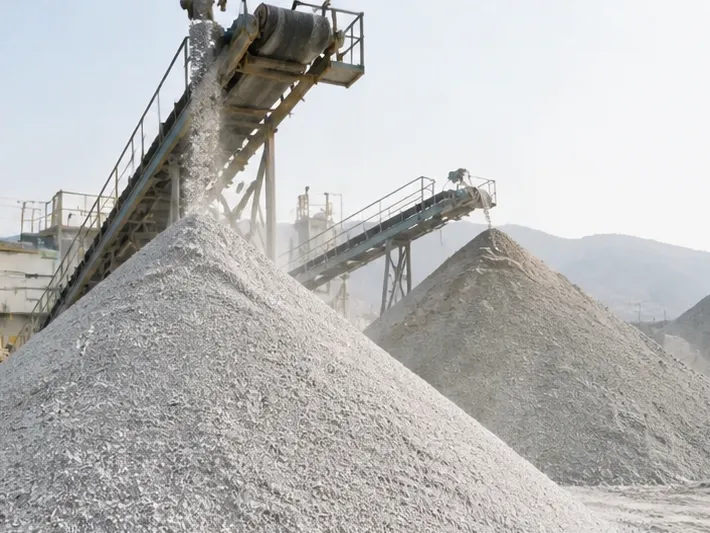
These principles do not stay in the quarry. In a laboratory, where a three-gram aliquot must speak for a whole deposit, the stakes are paradoxically higher. A poorly crushed sample yields a misleading assay. An over-pulverized one destroys the very mineral surfaces you need to study.
Our equipment is built around this two-stage logic. Our jaw crushers perform that essential initial volume reduction with adjustable gap settings that let you feed secondary units precisely. For the fine, uniform shaping, our cone mills and crushers deliver the controlled compressive action that exploits grain boundaries without over-grinding.
And once you have your grinding-ready feed, the rest of our sample preparation ecosystem—planetary ball mills, jet mills, splitting devices, and sieve shakers—carries the material forward with the same philosophy: process in stages, respect the mineral structure, never overdo it.
Whether you’re purifying feldspar for advanced ceramics or preparing it for XRF analysis, the combination of a jaw and cone crushing stage remains the most psychologically sound, energetically efficient, and mineralogically respectful path.
A rock has layers. Its liberation should too.
Ready to build a sample preparation workflow that thinks like your ore? Contact Our Experts
Quick Links
Suggested Products
150x250mm Laboratory Jaw Crusher for Medium Hard Material Crushing and Sample Preparation 250x400mm Jaw Crusher Medium Crushing Equipment for Mining Mineral Sample Preparation 150×125mm Laboratory Jaw Crusher for Medium and Fine Crushing of Brittle Materials Horizontal Jaw Crusher Medium Hard Material Crushing Laboratory Sample Preparation Equipment Heavy Duty Industrial Jaw Crusher for Primary Ore Crushing and High Capacity Mineral Material Size ReductionFurther Reading
The Initial Crack: Why Jaw Crushers Hold the Invisible Blueprint of Microcrystalline Cellulose Granules The Micron-Level Ballet: How Two-Stage Grinding Transforms Biochar into Wood’s Deepest Ally The Particle That Lies: Why Your XRD Analysis Fails Before You Even Begin The Pressure Before the Fire: Why a Laboratory Hydraulic Press Defines Your Ceramic’s Destiny The Art of Persuading Wood: How a Laboratory Hot Press Solves the Flaw in Nature’s Blueprint
PowderPreparation
Last updated on May 15, 2026
Related Products
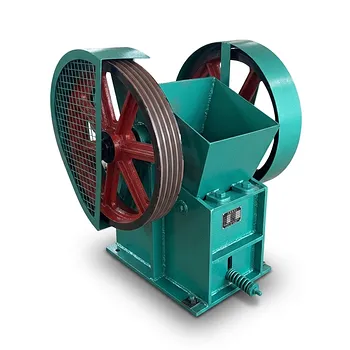
150x250mm Laboratory Jaw Crusher for Medium Hard Material Crushing and Sample Preparation
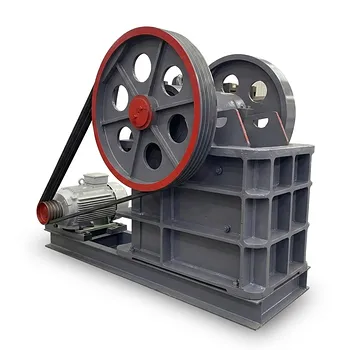
250x400mm Jaw Crusher Medium Crushing Equipment for Mining Mineral Sample Preparation
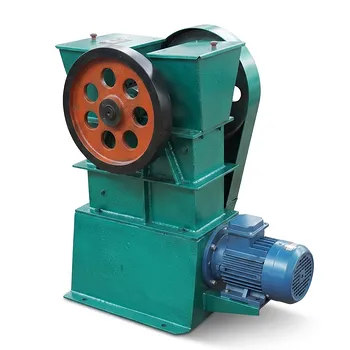
150×125mm Laboratory Jaw Crusher for Medium and Fine Crushing of Brittle Materials
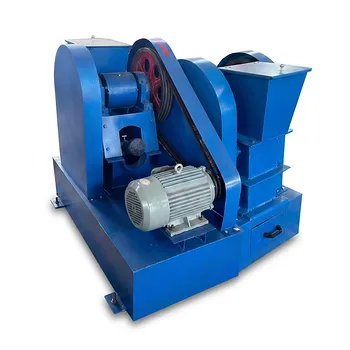
Horizontal Jaw Crusher Medium Hard Material Crushing Laboratory Sample Preparation Equipment
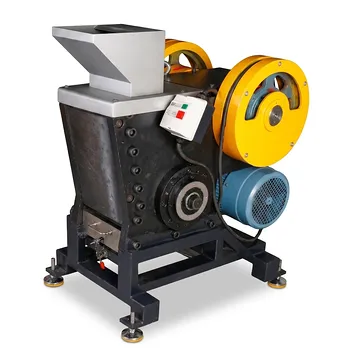
Heavy Duty Industrial Jaw Crusher for Primary Ore Crushing and High Capacity Mineral Material Size Reduction
Environmentally Friendly Sealed Jaw Crusher for Laboratory Sample Preparation
Laboratory Small Jaw Crusher 100x60mm
150x250mm Custom Laboratory Jaw Crusher for Coal Ore Mineral Crushing
Heavy-Duty Jaw Crusher for Medium-Hard Ore and Industrial Mineral Crushing
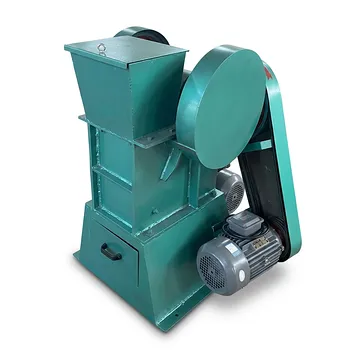
Small Laboratory Jaw Crusher 150x200mm Feed Opening for Sample Preparation and Medium Fine Crushing
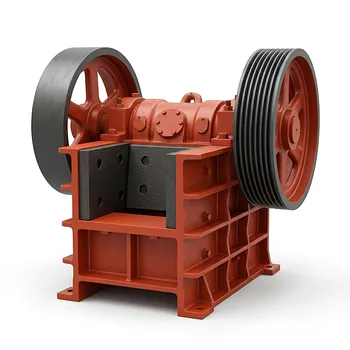
250x400 Jaw Crusher for Primary Crushing of Ores and Bulk Materials
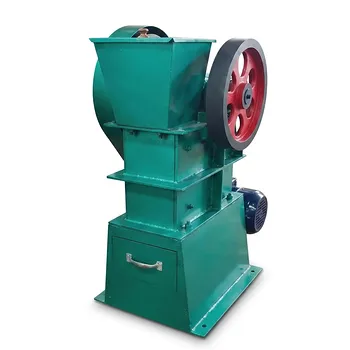
EP Series Small Jaw Crusher for Laboratory Sample Preparation
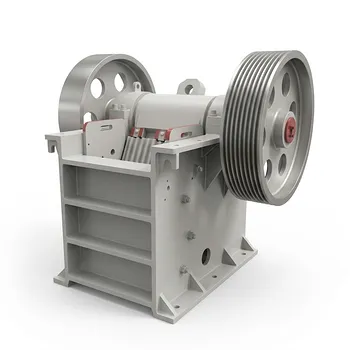
Jaw Crusher with 400x600mm Feed Opening for Primary Rock Crushing in Mining and Construction
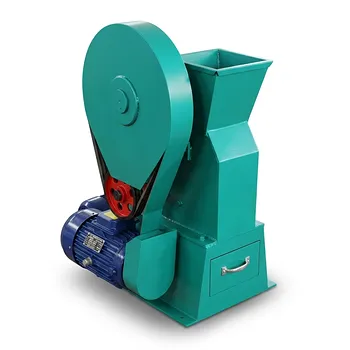
Small Laboratory Jaw Crusher 125x100mm Feed Opening for Sample Preparation
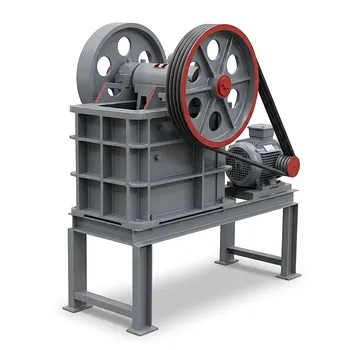
Laboratory Jaw Crusher 200x300mm Opening for Primary Crushing of Ores and Aggregates
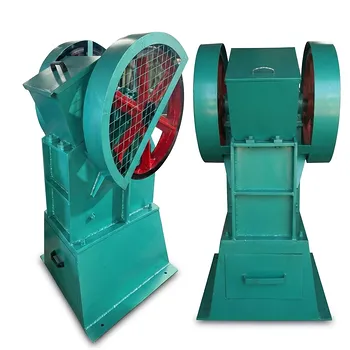
Sealed Jaw Crusher for Laboratory Material Crushing and Sample Preparation
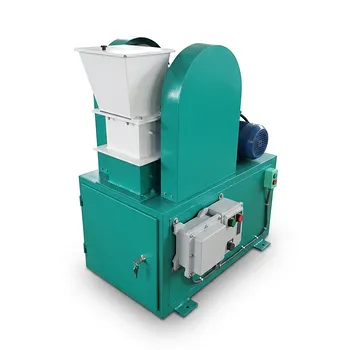
Custom Explosion-Proof Sealed Jaw Crusher for Laboratory and Industrial Sample Preparation
Heavy Duty Industrial Laboratory Jaw Crusher for Primary Sample Preparation and Hard Material Size Reduction
Custom Raised Height Laboratory Jaw Crusher for Precision Sample Preparation in Material Science