The Initial Crack: Why Jaw Crushers Hold the Invisible Blueprint of Microcrystalline Cellulose Granules
May 23, 2026
The block that shouldn’t exist
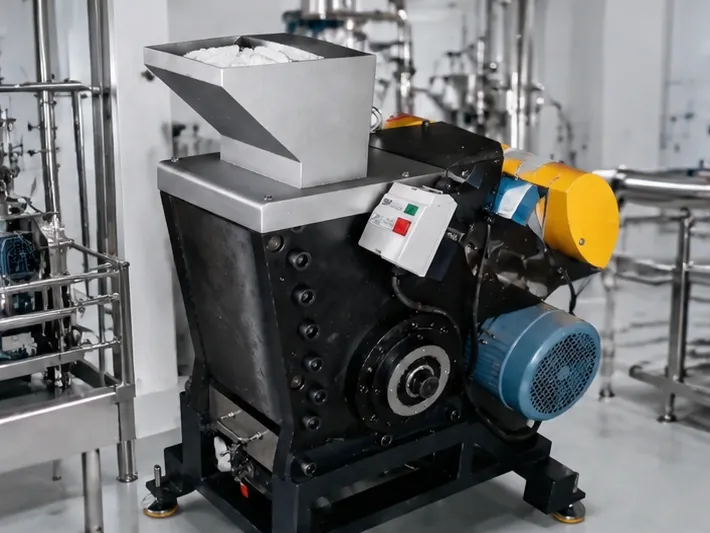
A compressed Microcrystalline Cellulose slug sits on the bench. It’s dense, rigid, and uncooperative. The operator needs granules—not powder, not chunks. Somewhere inside that block, the future of a tablet’s dissolution profile, hardness, and weight uniformity is already written. It just needs to be released.
This is the quiet tension of material processing. The slug is a temporary holding pattern. The jaw crusher is the negotiator.
We tend to overvalue the final compression step because that’s where the tablet takes shape. But that’s a little like judging a novel by its binding. The story—the fracture lines, the interlocking surfaces, the packing behavior—was largely set in the first few seconds of primary crushing.
An industrial jaw crusher doesn’t merely break things. It sets the morphological DNA of your granules. And if you’re not controlling that deliberately, you’re gambling downstream.
Why mechanical fragmentation is a structural conversation
When two jaw plates close on an MCC slug, they initiate a cascade of events that go far beyond “making it smaller.” Dry, compressed cellulose fibers have internal bonds formed under tonnage. A jaw crusher applies uniaxial compressive force, but the actual failure is a complex mixture of tension, shear, and brittle fracture.
That matters. Different failure modes produce different granule shapes. And shape is not cosmetic—it’s functional.
Three invisible changes that happen in the crush zone
-
Bond disruption as a predictor
The crusher doesn’t just break the slug; it selectively fractures the weakest bridges first. This pre-conditions the material’s response to secondary compression. The granule population that emerges carries a “memory” of its parent slug’s density and the crusher’s force vector. -
Surface area amplification without fines chaos
Fragmentation expands specific surface area radically. But a calibrated jaw crusher, unlike indiscriminate impact mills, can tilt the ratio toward fresh fractured surfaces rather than an excess of ultra-fines that kill flowability. -
The birth of interlocking geometry
Granules from compressive crushing have angular, irregular profiles. That’s exactly what you want for mechanical interlocking during final tableting. Rounded, polished granules may flow beautifully but produce weak tablets. The jaw crusher gives you the surface roughness that later translates into tensile strength.
The takeaway: the first crush is the moment where you encode tablet microstructure.
Morphology is the hidden language of process control
“Granules don’t just get pressed—they fragment again during final compression.” That’s the insight most formulations scientists obsess over too late.
When a slug-derived granule enters a die and faces pressure from both punches, it doesn’t simply deform. It breaks again, into smaller sub-granules, and these new fracture surfaces determine the contact points that will become solid bonds.
If the jaw crusher produced inconsistent initial morphology—some overly stressed, some barely cracked—then the secondary fragmentation pattern is unpredictable. You get density islands. Capping. Lamination.
The psychology of the predictable baseline
Engineers crave repeatability not out of rigidity, but because it removes variables that can’t be debugged later. A jaw crusher, when properly set, gives you a standardized starting aggregate. The gap setting, the speed, the feed rate: these become your knobs for a defined population of fracture planes.
Research teams use this to correlate slugging pressure with final tablet strength. Manufacturing teams use it to keep high-speed presses from alarming every twenty minutes. Both are chasing the same thing: a process that tells the truth about the material instead of about the machine’s quirks.
The efficiency argument (and the trap)
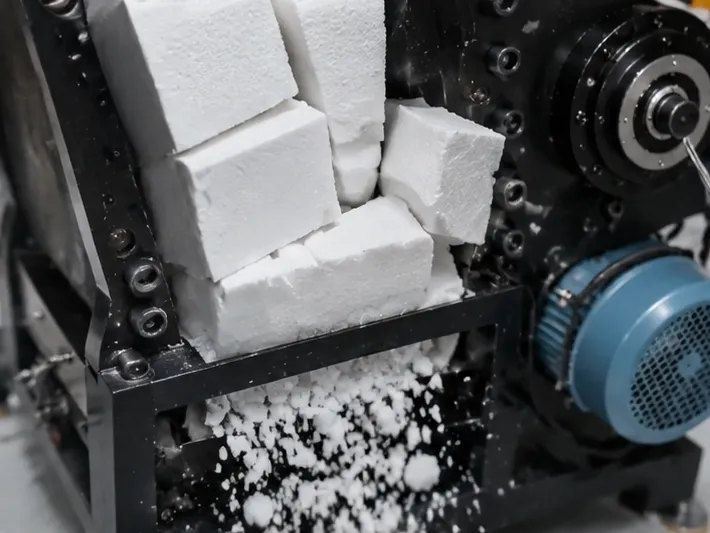
On the surface, jaw crushers are chosen because they take huge feed sizes and deliver high reduction ratios. They protect your expensive fine-grinding mills from choking on oversized slugs. They’re rugged, simple, and don’t ask for much.
But here’s the trap: efficiency can mask inattention. If the gap is too wide, you get coarse granules that look fine but have insufficient fractured surface area—leading to soft tablets. Too narrow, and you generate excessive fines that cause weight variation and dust problems.
The truth table looks something like this:
| What you set | What you get | What happens later |
|---|---|---|
| Wide discharge gap | Coarse, blocky granules | Poor secondary compression, low hardness |
| Narrow discharge gap | Fine-heavy distribution | Flow interruptions, segregation in hopper |
| Calibrated gap + consistent feed | Angular, interlocking granules with controlled fines | Predictable packing density, strong tablets |
That calibration requirement is where the art lives. It’s not a set-it-and-forget-it parameter. It’s your primary lever on final product quality, and it deserves the same reverence as punch dwell time or pre-compression force.
Beyond the jaw: completing the preparation ecosystem
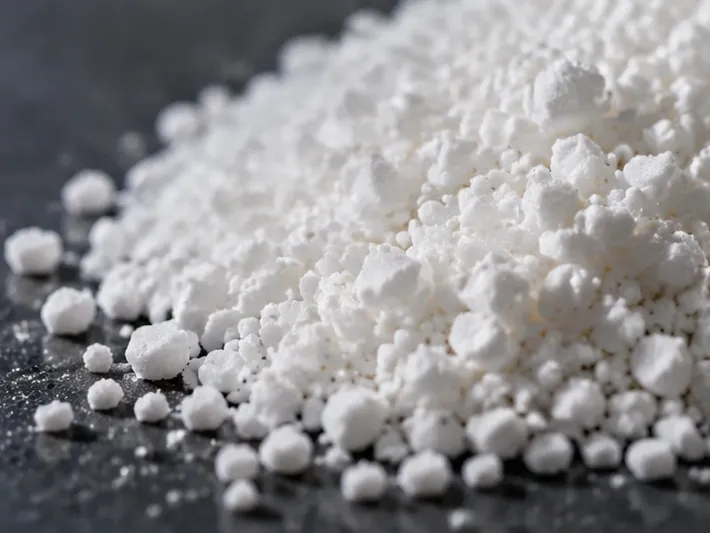
No crusher works in isolation. The moment those granules leave the jaw chamber, they enter a judgment phase: screening, possible secondary milling, blending, and finally compaction.
That’s why the entire sample preparation chain needs to be coherent. A precision jaw crusher front-loads quality, but you need screening to cut the fines and oversize tails, mills to adjust the envelope when research demands it, and presses that can faithfully reproduce the force profiles you’ve designed.
From liquid nitrogen cryogenic mills that preserve temperature-sensitive structures to planetary ball mills that refine particle size distributions and vacuum hot presses that consolidate materials under controlled atmospheres, the ecosystem matters. The jaw crusher is the starting gun, not the entire race.
For MCC slug processing specifically, the ideal workflow is rarely just crush-and-tablet. It’s more often:
- Primary crushing (jaw crusher) for controlled fragmentation and morphology initiation.
- Screening (air-jet or vibratory sieve shakers) to isolate the target granule fraction and remove fines.
- Optional fine grinding or mixing if uniform additives are needed.
- Final compaction on a laboratory hydraulic press or XRF pellet press under precise load control.
Each step confirms or denies the decisions made in the previous one. The jaw crusher’s gap setting becomes the root cause of everything downstream. It’s honest in that way.
The engineer’s romance with the primary crack
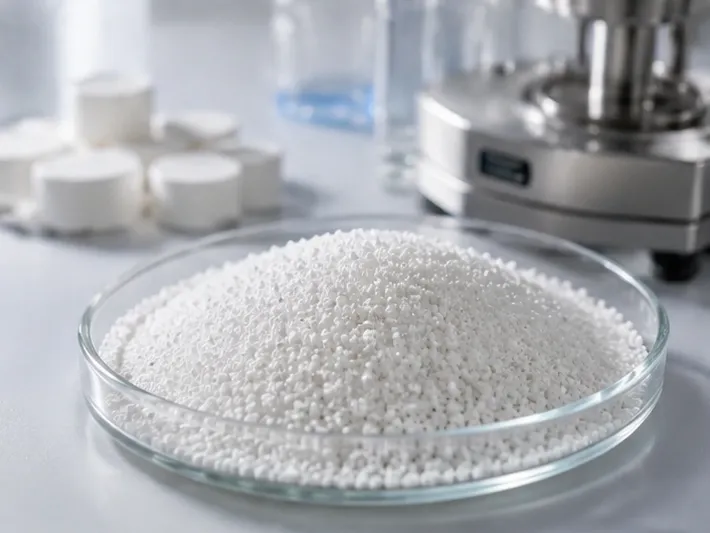
There’s something deeply satisfying about the fact that the most elementary operation—squeezing a brittle block until it splits—is actually the most intellectually rich. It’s not glamorous. It’s noisy, dusty work. But inside that chamber, you’re not just breaking cellulose. You’re designing fracture paths that will later determine how a tablet disintegrates in a patient’s stomach or how a catalyst pellet maintains its shape in a reactor.
And when it works, it’s invisible. No one credits the jaw crusher for a batch of tablets that compresses perfectly every time. That’s the point. Great sample preparation leaves no trace except flawless data and uninterrupted production.
If you’re pushing Microcrystalline Cellulose slugs through development or production, the most consequential choice you’ll make isn’t which press to use. It’s how you control that first crack. Everything else is editing.
We design and supply complete laboratory sample preparation systems—from industrial jaw crushers and cryogenic grinders to planetary ball mills, air-jet sieves, and a full range of hydraulic presses, including cold/warm isostatic presses and vacuum hot presses—specifically to give you command over the invisible variables that determine material performance. Contact Our Experts
Quick Links
Suggested Products
Heavy Duty Industrial Jaw Crusher for Primary Ore Crushing and High Capacity Mineral Material Size Reduction 150×125mm Laboratory Jaw Crusher for Medium and Fine Crushing of Brittle Materials 150x250mm Laboratory Jaw Crusher for Medium Hard Material Crushing and Sample Preparation Heavy-Duty Jaw Crusher for Medium-Hard Ore and Industrial Mineral Crushing 250x400mm Jaw Crusher Medium Crushing Equipment for Mining Mineral Sample Preparation
PowderPreparation
Last updated on May 15, 2026
Related Products
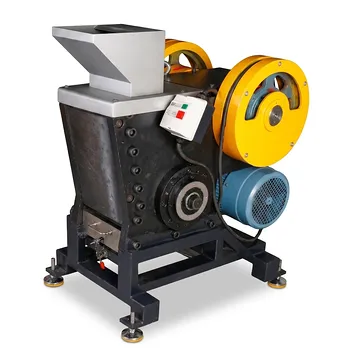
Heavy Duty Industrial Jaw Crusher for Primary Ore Crushing and High Capacity Mineral Material Size Reduction
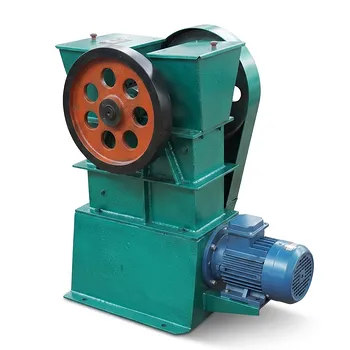
150×125mm Laboratory Jaw Crusher for Medium and Fine Crushing of Brittle Materials
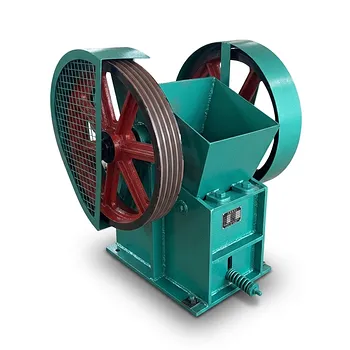
150x250mm Laboratory Jaw Crusher for Medium Hard Material Crushing and Sample Preparation
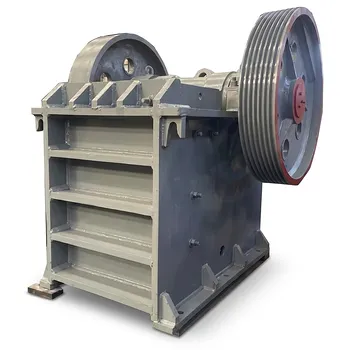
Heavy-Duty Jaw Crusher for Medium-Hard Ore and Industrial Mineral Crushing
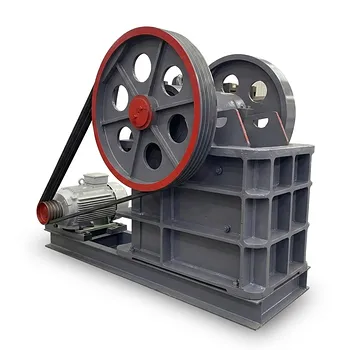
250x400mm Jaw Crusher Medium Crushing Equipment for Mining Mineral Sample Preparation
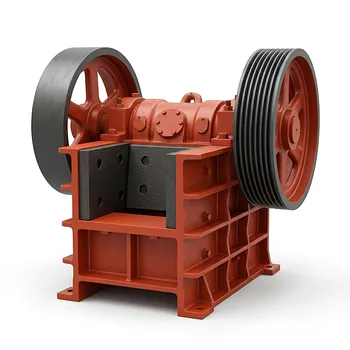
250x400 Jaw Crusher for Primary Crushing of Ores and Bulk Materials
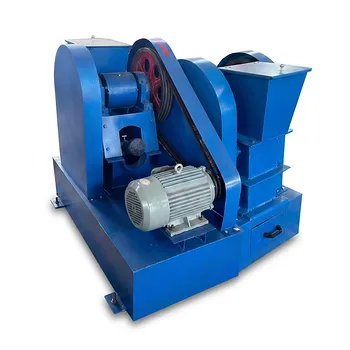
Horizontal Jaw Crusher Medium Hard Material Crushing Laboratory Sample Preparation Equipment
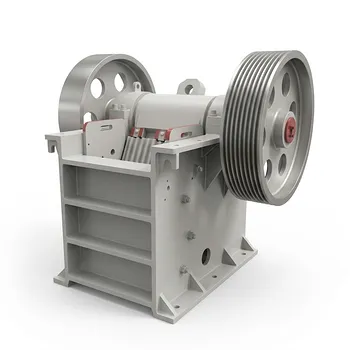
Jaw Crusher with 400x600mm Feed Opening for Primary Rock Crushing in Mining and Construction
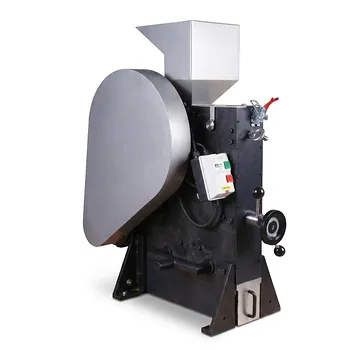
Heavy Duty Industrial Laboratory Jaw Crusher for Primary Sample Preparation and Hard Material Size Reduction
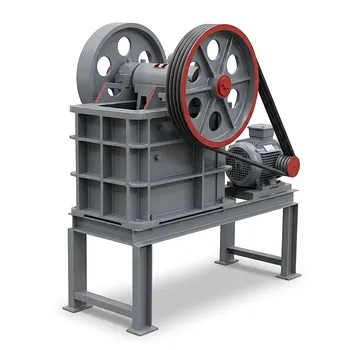
Laboratory Jaw Crusher 200x300mm Opening for Primary Crushing of Ores and Aggregates
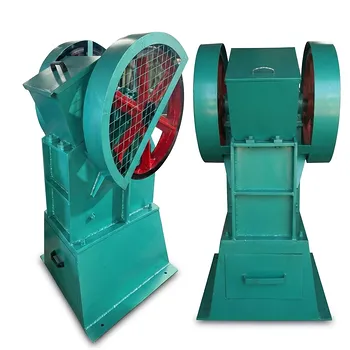
Sealed Jaw Crusher for Laboratory Material Crushing and Sample Preparation
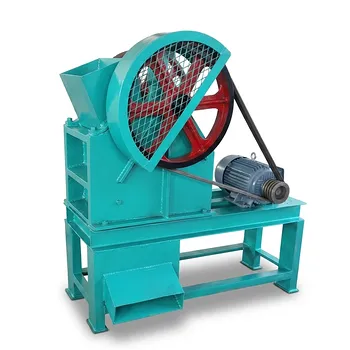
150x250mm Custom Laboratory Jaw Crusher for Coal Ore Mineral Crushing
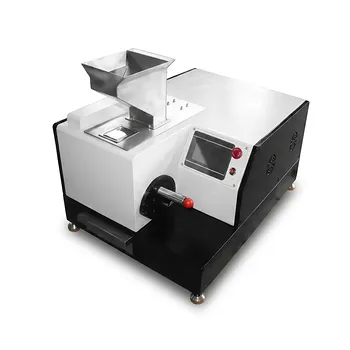
Experimental Jaw Crusher for Laboratory Ore Crushing and Sample Preparation
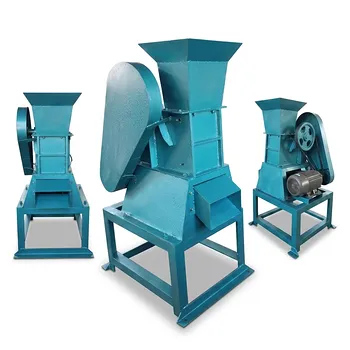
Custom Raised Height Laboratory Jaw Crusher for Precision Sample Preparation in Material Science
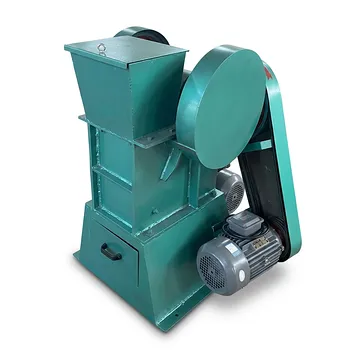
Small Laboratory Jaw Crusher 150x200mm Feed Opening for Sample Preparation and Medium Fine Crushing
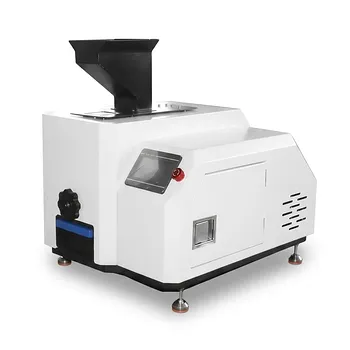
Laboratory Jaw Crusher 2025 Model for Ore and Brittle Material Crushing
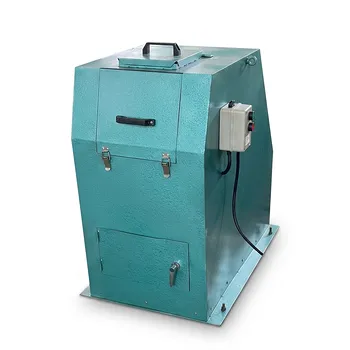
Environmentally Friendly Sealed Laboratory Jaw Crusher for Sample Preparation
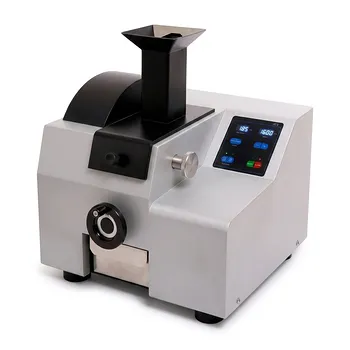
Laboratory Benchtop Jaw Crusher for Hard Brittle Materials Primary Size Reduction and Sample Preparation
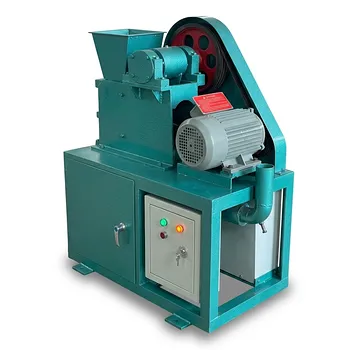
EP-B Type Sealed Jaw Crusher for Laboratory Sample Preparation