The Dust Doesn’t Lie: Why Drying Road Dust Preserves the Environmental Truth That Grinding Destroys
Aug 08, 2026
The Sample That Held a City’s Breath
Imagine a lab bench somewhere in a mid-sized city, held up by a question only a few microns wide.
A researcher has just collected a set of road dust samples from three intersections.
The question is not simply “what’s in this dust?” but “what are people actually breathing?”
Brake pad residue. Tire wear particles. Trace metals from catalytic converters.
Everything that makes up the chemical fingerprint of modern urban life is locked in that gray powder.
But before the sample can speak inside the XRF spectrometer, a decision must be made.
Dry it, or grind it?
On the surface, the choice feels procedural. Most standard operating procedures for solid samples lean toward grinding.
Grinding equals homogeneity. Homogeneity equals repeatability.
But here, in the realm of environmental forensics, grinding doesn’t just break particles—it breaks the story.
That’s the engineer’s paradox we’re going to unpack. Not by arguing which method is always better, but by understanding what truth gets lost when a laboratory becomes too neat.
What Road Dust Actually Represents
Road dust is not just “dirt.” It’s an environmental archive that forms in real time.
It carries a physical narrative
A tire scrubs the asphalt, generating rubber particles with a size distribution determined by vehicle speed, road texture, and humidity.
Brake pads shed a copper- and zinc-rich dust that clusters into aggregates.
Diesel soot, pavement wear, and even deicing salt crystals get glued together by road moisture and bitumen.
All of this creates a polydisperse, low-cohesion mixture with distinct particle populations ranging from submicron to several hundred microns.
The natural particle size distribution is the environmental signature.
Grind the sample, and you obliterate the information about which part of the dust was respirable, which part would settle, and which part acts as a long-term pollutant reservoir.
It holds a surface chemistry message
Many toxic elements in road dust are surface-deposited, not part of the mineral lattice.
Zinc from tire wear. Platinum-group elements from catalytic converters. PAHs embedded in soot particles.
Their chemical reactivity, leaching potential, and bioavailability all depend on the state of the particle surface.
Put this dust in a planetary ball mill for five minutes, and that surface story evaporates.
The high-energy impacts generate fresh, unweathered surfaces that never existed in the environment.
The dust becomes laboratory fiction—a chemically homogenized powder that represents only itself.
The Psychology of the Grinding Default
Why do labs reach for the mill first?
It’s not scientific tradition. It’s comfort.
The allure of homogeneity
Humans love a clean signal. A flat baseline. A pellet that gives the same reading on spot 1 as on spot 10.
That’s the Morgan Housel angle: we prefer precision we can measure over truth we can’t.
Grinding delivers apparent precision—a tight standard deviation on XRF measurements—while quietly destroying the sample’s environmental authenticity.
It’s the same cognitive bias that makes people believe a spreadsheet with seven decimal places is more accurate than one with two.
The neglect of contamination psychology
Another cognitive blind spot: we trust the tool.
A tungsten carbide grinding jar feels inviolable. Hard. Clean.
Yet every mechanical size-reduction process sheds microscopic fragments. Steel, tungsten carbide, zirconia—none is immune.
For most geological samples, a few parts per billion of added tungsten doesn’t matter.
For road dust, where lead, chromium, and nickel are precisely the elements you’re trying to measure at environmental trace levels, contamination from grinding media creates a ghost signal that can invalidate the entire dataset.
It’s a failure mode that doesn’t announce itself. The contaminant doesn’t show up as an outlier. It masquerades as a natural background level.
The Drying Imperative: Engineering for Environmental Truth
So what happens when the protocol selects low-temperature oven drying instead of grinding?
Moisture removal without structural violence
Road dust carries ambient moisture—sometimes over 10% by mass.
Water is an X-ray attenuator. It absorbs soft characteristic X-rays (especially from lighter elements like sodium, magnesium, aluminum) and scatters harder X-rays in ways that depress fluorescence intensity.
The physics is straightforward:
The XRF intensity I relates to the element concentration C as I = k * C / μ, where μ is the mass attenuation coefficient.
Moisture increases the effective μ without contributing analyte, systematically underestimating concentrations.
Drying at 105°C for a fixed duration drives off this free water without altering mineral structures or decomposing organic matter that acts as a pollutant carrier.
The mass then stabilizes. The attenuation becomes predictable. The sample is ready to pelletize.
Preserving particle morphology
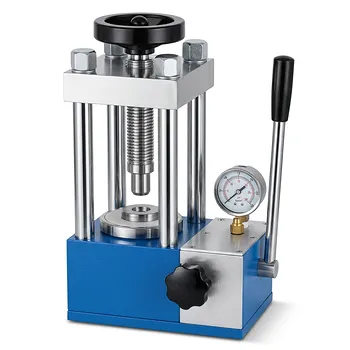
A dried but unground sample can be pressed into an XRF pellet using a hydraulic press with careful attention to binder selection and pressure.
Yes, the pellet surface will have microscopic roughness. Yes, the particle size variation means you’ll need to take multiple spot measurements and average the results.
But what you gain is irreplaceable: the ability to link analytical data back to the actual environmental process that produced the dust.
When source apportionment algorithms feed on your data—assigning zinc to tire wear, copper to brake pads, lead to legacy paint or leaded gasoline—you need the original chemical context, not a mill-homogenized average.
The Trade-off Table: Drying vs. Grinding for XRF
Choice is rarely about which method is “better.” It’s about which sacrifice you’re willing to make.
| Decision Factor | Drying (Preserve Truth) | Grinding (Pursue Precision) |
|---|---|---|
| Particle size information | Fully retained | Completely lost |
| Surface chemistry | Pristine, environmentally authentic | Artificially activated and altered |
| Contamination risk | Near-zero (non-contact process) | Significant—grinding media elements added |
| Measurement repeatability | Moderate—requires sampling across pellet surface | High—homogeneous powder, uniform signal |
| Data comparability to field studies | Excellent—matches regulatory and source apportionment datasets | Poor—sample no longer represents study object |
| Elemental recoveries for bulk composition | Slightly reduced for elements in coarse particles | Maximized due to uniform penetration depth |
The table tells a story: grinding optimizes for analytical convenience. Drying optimizes for environmental honesty.
When Grinding Actually Makes Sense
No engineering decision is absolute. There are cases where grinding is the right call.
Total bulk analysis, not environmental forensics
If your project investigates the total load of elements in the road dust—for waste classification or bulk material reuse—then destroying the particle structure is acceptable.
You don’t care about particle size because the question is simply “how much lead is in this ton of street sweepings?”
Overcoming extreme heterogeneity
Road dust from certain environments—construction zones, for example—contains unusually large aggregate chunks that cannot be pressed into a stable pellet without grinding.
In these edge cases, cryogenic grinding with a liquid nitrogen cryogenic grinder offers a middle path: embrittle the material at low temperature to reduce contamination potential and minimize surface chemical alteration compared to room-temperature milling.
But even here, document the grinding step explicitly in your methodology so that anyone comparing your data to environmental reconnaissance studies knows that the particle context was sacrificed for bulk precision.
The Equipment Behind Good Choices
Good decisions are useless without the hardware to execute them.
Sample preparation that respects the material identity
For the drying-first workflow, the essential tools are simple but critical:
- A forced-air oven with precise temperature control (±2°C) and uniform airflow to ensure consistent moisture removal across the entire set of samples in a batch.
- An XRF pellet press—ideally a dedicated XRF pellet press that can reach 20–40 tonnes of pressure with a digital pressure gauge and programmable hold time. Consistent pressure is the secret to producing pellets that are mechanically stable enough to withstand repeated XRF spot analysis without cracking, even when the particle size is heterogeneous.
- Optional: vibratory or air-jet sieves to pre-classify the dried dust if the research question requires isolating specific size fractions before analysis rather than analyzing the whole bulk.
When the workflow demands size reduction
For projects that must grind, the equipment choice determines the contamination profile:
- Planetary ball mills with a choice of grinding jar materials (tungsten carbide, zirconia, agate) let you match the jar chemistry to the analytes of interest—minimizing, though never eliminating, contamination.
- Liquid nitrogen cryogenic grinders are the superior choice for temperature-sensitive organic-rich road dust, preventing charring and reducing the reactivity that can alter surface chemistry during the grind.
- Jaw crushers and disc mills handle large volumes for bulk waste classification, where the scale of throughput matters more than ultra-trace precision.
Then, of course, pressing that ground powder into an XRF pellet with a laboratory hydraulic press—potentially a cold isostatic press (CIP) for the ultimate density uniformity—gets the sample into spectrometer-ready form.
The Workflow That Fits the Question
Writing a standard operating procedure is fundamentally an act of translation.
The environmental question translates into a sample preparation decision.
-
Question: “Where did the lead in this neighborhood’s dust come from?”
Answer: Dry at 105°C, pelletize without grinding, perform XRF spot analysis across multiple points. The preserved particle association tells the source story. -
Question: “What is the total heavy metal load for disposal classification?”
Answer: Cryogenically grind for safe, low-contamination homogenization, then press into a uniform pellet for bulk XRF quantification. -
Question: “Does this batch meet regulatory threshold X?”
Answer: Follow the regulatory protocol exactly—which almost always specifies drying and sieving rather than grinding, because regulators understand that grinding creates a sample that no longer represents what people touch or inhale.
The workflow is the scientific hypothesis made physical. Choose it with that weight in mind.
Engineer’s Epilogue: Let the Dust Have the Last Word
An XRF pellet, if you think about it for too long, becomes a philosophical object.
It holds matter that traveled from brake pad to curb, from curb to child’s shoe, from shoe to carpet.
The engineer’s first impulse—grind it uniformly, make it smooth, reduce the noise—is an impulse toward control.
Control is not the same thing as truth.
Sometimes the best sample preparation is the one that handles the material least.
Dry it gently, press it firmly, and let the inhomogeneities remain.
They are not noise. They are data.
The equipment to achieve this exists—from controlled ovens and dedicated XRF pellet presses to the wider family of laboratory crushers, mills, mixers, and isostatic presses for the moments when grinding is truly warranted.
The harder part is the decision discipline: to let the environmental question, not the laboratory routine, drive the protocol.
If your current sample preparation workflow feels like a default choice, maybe it’s time to revisit it—starting with the road dust on your bench. Contact Our Experts
Quick Links
Suggested Products
实验室旋转式压片机 多冲模单压式自动连续压片 6 Ton Variable Frequency Single Punch Tablet Press Ordinary Type Rotary Tablet Press for Pharmaceutical Chemical Food Electronic Industries Enhanced 9 Punch Rotary Tablet Press for Powder Compaction 6-Ton Small Single-Punch Tablet Press — Laboratory Powder & Granule Tableting Equipment / Tablet Forming Machine
PowderPreparation
Last updated on May 14, 2026
Related Products
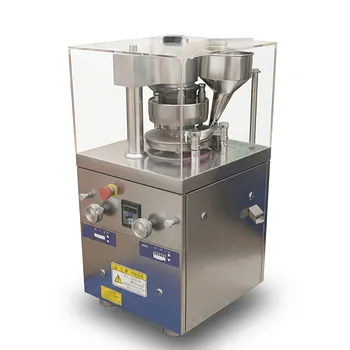
实验室旋转式压片机 多冲模单压式自动连续压片
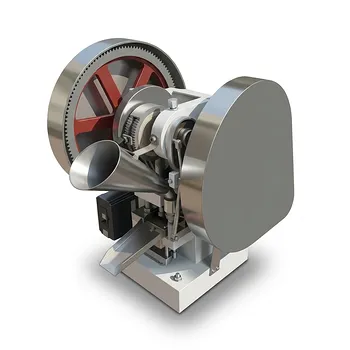
6 Ton Variable Frequency Single Punch Tablet Press
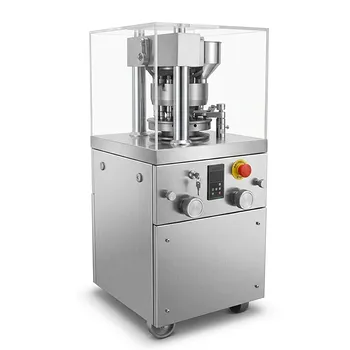
Ordinary Type Rotary Tablet Press for Pharmaceutical Chemical Food Electronic Industries
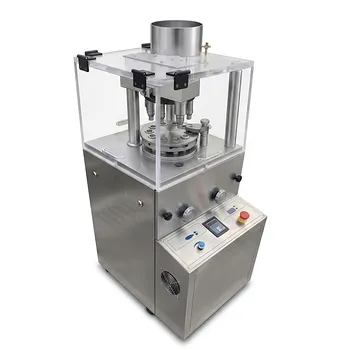
Enhanced 9 Punch Rotary Tablet Press for Powder Compaction
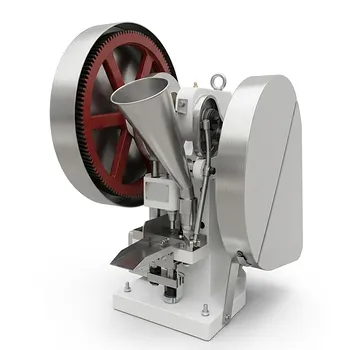
6-Ton Small Single-Punch Tablet Press — Laboratory Powder & Granule Tableting Equipment / Tablet Forming Machine