The Particle's Edge: How Powder Refinement Determines the Survival of Ceramic Armor
Jul 08, 2026
The Moment of Truth
A tungsten-carbide penetrator strikes a ceramic plate at 900 meters per second. In the first few microseconds, a shockwave races through the material. The armor either holds—absorbing the energy through a cascade of controlled micro-fractures—or it fails catastrophically.
What decides that outcome is invisible. It’s not the thickness. It’s not the price. It’s the structure at the grain level—a structure written months earlier, in a quiet room, inside a grinding jar.
Ceramic armor is a materials problem dressed as a defense problem. And the materials problem begins with powder.
The ultra-fine powder. The powder so fine it clumps when you breathe on it. The powder that, if refined with one wrong parameter, carries the seed of failure into every subsequent processing step.
The Invisible Precursor to Ballistic Performance
You cannot inspect your way to a superior armor plate. You must build it from the bottom up.
High-efficiency powder refinement is not a preparation step. It is the foundational architecture of the material. Planetary ball mills, jet mills, high-energy mixers—these are not just size-reduction tools. They are the instruments that set grain boundary chemistry, sintering kinetics, and defect populations.
If the powder is wrong, the armor is wrong. You can press it perfectly, sinter it in a perfect vacuum, and it will still fail. The error was embedded before the first forming die closed.
This is what makes powder refinement so cognitively difficult: the feedback loop is long. The consequences arrive weeks later, in a ballistics lab, wearing the mask of a different process step's failure.
Why Smaller Means Stronger
The single most reliable lever for armor performance is grain size after sintering. And to get a small grain size after sintering, you must start with an even smaller particle size before sintering.
High-energy mills—jet mills, planetary ball mills—reduce ceramic precursors to sub-micron and nanometer scales. This does two things at once:
- It dramatically increases specific surface area, storing chemical potential energy.
- It creates high surface curvature at particle edges, which drives densification at lower temperatures.
Both effects push the material toward full density. But the real gift is microstructural. Fine powders give you fine grains. Fine grains give you hardness. And hardness is the first line of defense against a high-velocity impact.
The Homogeneity Premium
Hardness alone is not enough. An armor plate must be hard everywhere. Compositional variation across a few millimeters creates weak points that a projectile will find—ballistics has a cruel way of exposing statistical defects.
Sintering aids, toughening agents, plasticizers—these components must be distributed at molecular-level uniformity. If a pocket forms with slightly less sintering aid, that region densifies differently, leaving residual porosity. That pore becomes a crack initiator. That crack initiator becomes a failure.
High-efficiency mixers and mills enforce this uniformity by brute force: repeated impact, shear, and particle-to-particle collisions break up agglomerates and distribute every additive across every powder granule. The result is a green body that sinters uniformly—a material that behaves like a single, coherent solid, not a composite of chance.
What Engineers Learn the Hard Way
Contamination Is a Silent Killer
Extended milling erodes grinding media. A few parts per million of tungsten carbide or zirconia, picked up from a jar, may seem negligible. But at the grain boundaries, those foreign atoms change everything.
They alter local melting points. They pin grain boundaries in unintended ways. They create stress concentrations. The bulk chemistry still tests fine. The microstructure does not.
This is the psychological trap: the numbers on the spec sheet look clean. The performance tells a different story. Choosing the right grinding media—chemically matched to the armor material—is not an optimization. It is a survival requirement.
The Fine-Powder Paradox
Sub-micron powders are thermodynamically eager to react with everything—including each other. They agglomerate. They stick to equipment walls. They become hard to handle, hard to recover, and hard to process without introducing new defects.
The very property that makes them excellent for sintering—high surface energy—makes them difficult to manage. This is the fine-powder paradox. It means that yield can drop. It means that batch-to-batch consistency becomes a control problem, not just an equipment problem.
The most sophisticated armor program in the world can be undermined by a recovery loss of 5% that shifts the particle size distribution of the remaining material. You didn't lose powder. You lost the target microstructure.
Energy Costs Are Real, But So Are Failure Costs
High-efficiency milling is energy-intensive. It adds time and cost to the production cycle. The temptation is to undershoot—to accept a slightly coarser powder, a slightly less uniform mix, and hope the sintering cycle compensates.
It rarely does. The sintering furnace cannot repair what the mill failed to achieve. The energy you save in refinement you pay back—with interest—in scrap, in failed ballistic tests, in requalification.
Choosing the Right Path Through the Powder Problem
The answer is not simply “use the most aggressive mill.” The answer is to match the equipment to the material's specific ballistic purpose.
The Focus Decision
Different armor requirements pull you toward different refinement strategies. The table below maps the major objectives to the equipment logic:
| Refinement Objective | Equipment Logic | Ballistic Impact |
|---|---|---|
| Maximum Hardness | Jet mills / high-energy planetary ball mills to drive particle size below 500 nm | Fine-grained sintered microstructure; high impact hardness; crack deflection at grain boundaries |
| Batch-to-Batch Consistency | Planetary ball mills with high-purity, chemistry-matched media; tight process control | Uniform plate performance across production lots; eliminates “lot lottery” |
| Complex Composite Systems | High-efficiency mixers capable of handling multiple additives without segregation | Stoichiometric accuracy in reaction-bonded ceramics; predictable toughening-phase distribution |
| Structural Integrity of the Green Body | Cold/Warm Isostatic Presses (CIP/WIP), vacuum hot presses | Defect-free green bodies that densify uniformly; maximum energy absorption in the final plate |
The Integration Principle
No single machine solves the entire problem. A jet mill gives you particle size. A high-efficiency mixer gives you distribution. A Cold Isostatic Press gives you a uniform green body free of density gradients. A vacuum hot press gives you final consolidation without residual porosity.
They are not competitors. They are a sequence. Miss one, and the chain breaks.
The Complete Workflow: From Raw Mineral to Survival-Grade Armor
This is why we supply not just one class of equipment, but the entire laboratory sample preparation chain for material science.
The chain begins with crushers—jaw crushers, roll crushers—to reduce ceramic raw materials from chunks to manageable granules. It proceeds through refinement: planetary ball mills, jet mills, disc mills, rotor mills, each selected for a specific size regime and contamination budget. It runs through sieve shakers and air-jet sieves for precise particle classification. It passes through powder mixers and defoaming mixers to create a homogeneous batch with distributed sintering aids.
Then it enters the pressing stage. Cold Isostatic Presses (CIP) and Warm Isostatic Presses (WIP) eliminate density variations in the green body. Standard lab presses and XRF pellet presses support rapid prototyping and quality control. For final densification, vacuum hot presses and hot presses deliver the temperature, pressure, and atmosphere control required for ballistic-grade microstructures.
Every piece of equipment is a decision point. Every decision point is an opportunity to introduce—or eliminate—a failure mode.
Understanding this workflow is not a technical detail. It is the difference between armor that works and armor that only looks like it should work.
The precision of your powder refinement equipment—and the compaction that follows—dictates the survival limit of the final material. We provide the complete solution to push that limit further. Contact Our Experts
Quick Links
Suggested Products
Benchtop Micro Air Jet Mill for Ultrafine Grinding of High Value Powders Vibratory Superfine Grinder for Ultra Fine Laboratory Powder Milling High Speed Air Induced Ultrafine Pulverizer Laboratory Superfine Powder Mill for Pharmaceutical and Material Science Sample Preparation Laboratory Desktop Ultra Fine Powder Grinder High Speed Micronizing Pulverizer Air Guided Ultrafine Pulverizer High Speed Laboratory Powder Grinder for Chemical and Material Processing
PowderPreparation
Last updated on May 14, 2026
Related Products
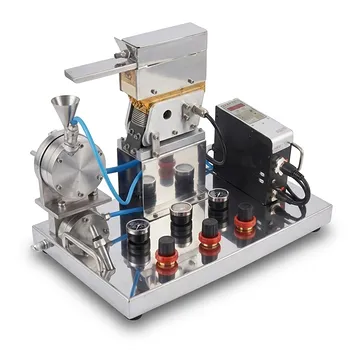
Benchtop Micro Air Jet Mill for Ultrafine Grinding of High Value Powders
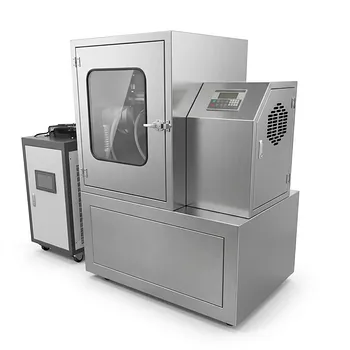
Vibratory Superfine Grinder for Ultra Fine Laboratory Powder Milling
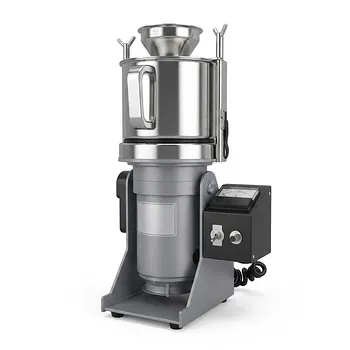
High Speed Air Induced Ultrafine Pulverizer Laboratory Superfine Powder Mill for Pharmaceutical and Material Science Sample Preparation
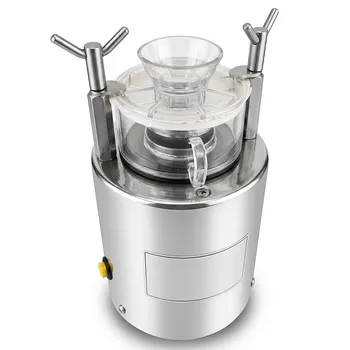
Laboratory Desktop Ultra Fine Powder Grinder High Speed Micronizing Pulverizer
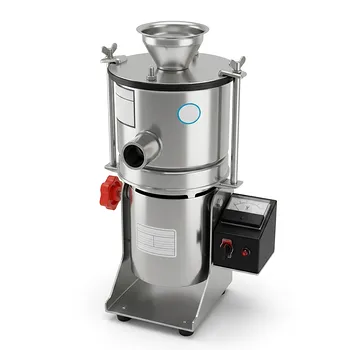
Air Guided Ultrafine Pulverizer High Speed Laboratory Powder Grinder for Chemical and Material Processing
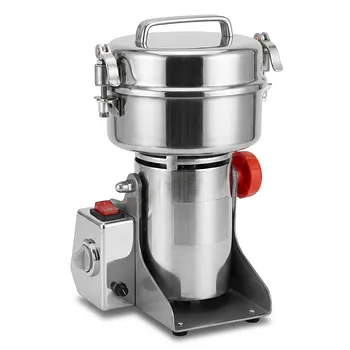
High Speed Laboratory Powder Grinder Small Batch Sample Preparation Mill
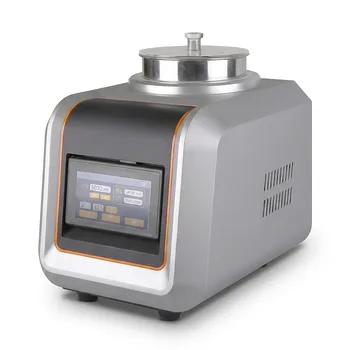
Laboratory Air Jet Sieving Machine for Fine Powder Particle Size Analysis and Deagglomeration
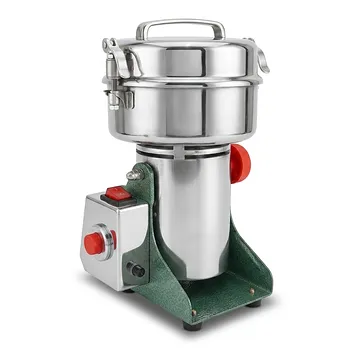
Small High-Speed Laboratory Grinder for Powder Processing
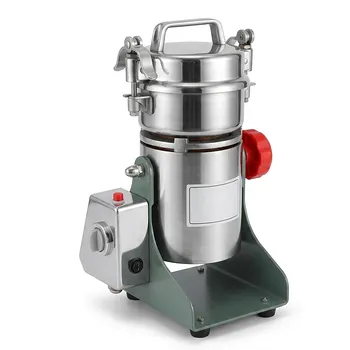
High Speed Swing Type Laboratory Pulverizer for Fine Powder Grinding and Sample Preparation
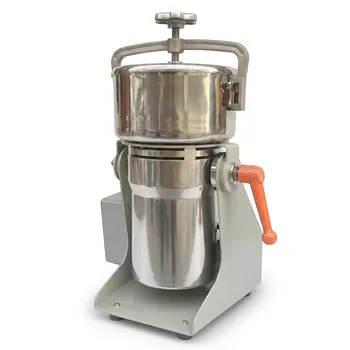
High Speed Laboratory Grinder Efficient Stainless Steel Powder Pulverizer Universal Material Science Mill for Sample Preparation
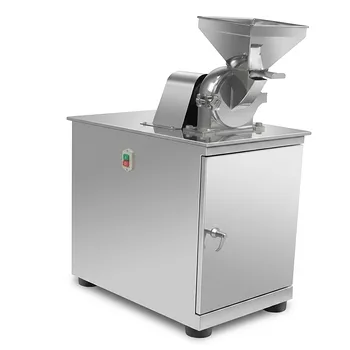
Universal Laboratory Pulverizer Grinder for Small Batch Powder Processing and Material Science Research
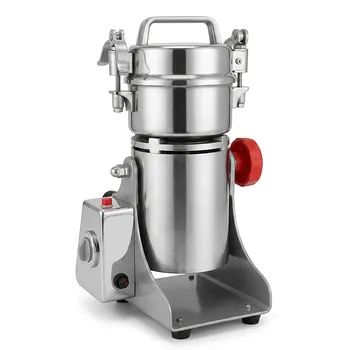
Industrial High Speed Small Sample Pulverizer Swing Type Laboratory Grinder for Powder Processing
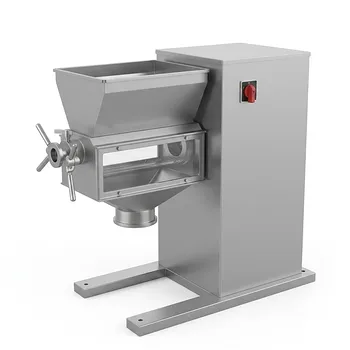
Industrial Swing Granulator for Powder Processing in Pharma Food and Chemical Industries
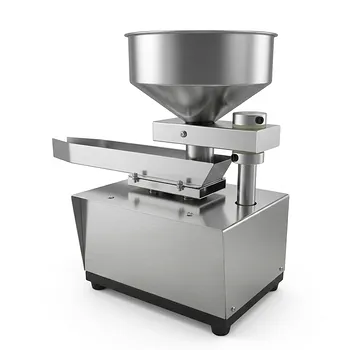
Automatic Vibrating Powder Feeder for Laboratory Material Processing Precision Vibratory Hopper Feeder for Granular and Powder Material Handling Industrial Grade Vibrating Tray Feeder for Consistent Material Sample Preparation
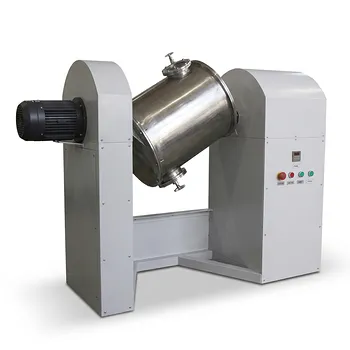
Inclined Mixer for Homogeneous Powder Blending and Grinding
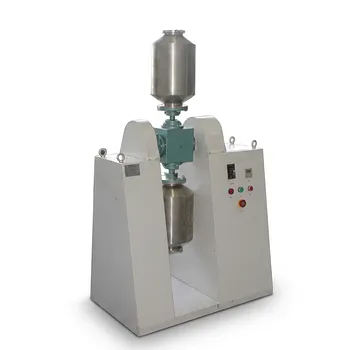
Multi Dimensional Universal Mixer for High Uniformity Powder Blending
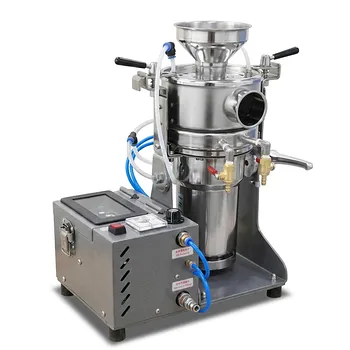
Water Cooled Pulse Jet Ultrafine Grinder
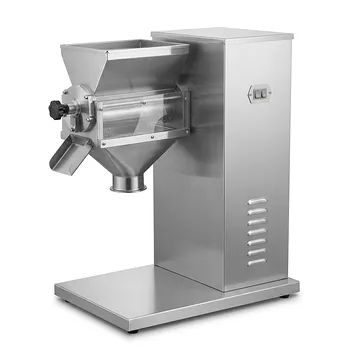
Small Swing Granulator Efficient Powder Granulation for Pharmaceutical Chemical Food Industries
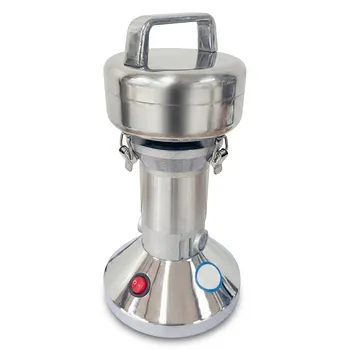
Small Trace Sample High Speed Pulverizer Grinder Laboratory Powder Mill