The Heat Beneath the Nanoscale: Why Cooling Systems Are the Unseen Guardians of Drug Nanosuspension Milling
Jul 01, 2026
The Morning a Batch Went Bad
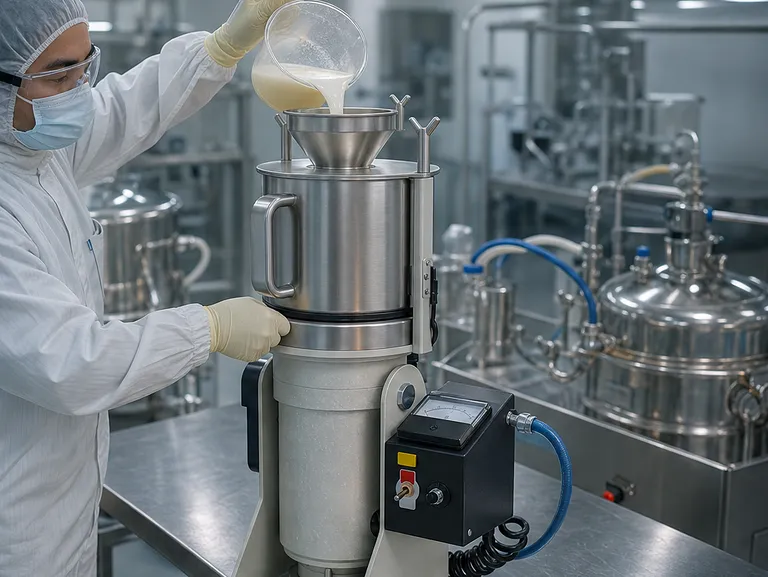
She opened the milling chamber and knew something was wrong. The suspension—meant to be a brilliant white nanosuspension of a new oncology API—had taken on a faint yellow tint. The particle size data looked fine. But the color told a deeper story. The drug had degraded. The batch was lost.
Later, the root cause was embarrassingly simple: heat.
The mill had run hot. Not by much—just a few degrees above the API’s thermal stability limit. That was enough to trigger a cascade of chemical decomposition. No alarm had sounded. No parameter on the control panel flashed red. The menace had been invisible.
The Physics of Fracture, the Reality of Heat
Grinding is violence at the microscale. You shatter particles by transferring mechanical energy into a powder bed. High-intensity collisions break bonds, create new surfaces, and generate enormous frictional heat.
Every joule you apply to reduce size doesn't disappear. Much of it becomes thermal energy inside the grinding chamber. Without intervention, this heat pushes the internal temperature far beyond safe limits for sensitive compounds.
In nanomilling, the energy density is extreme. Localized hot spots can form around grinding beads. The suspension medium itself heats up. What starts as a controlled mechanical reduction becomes a small-scale thermal reactor.
Thermal Degradation: Not a Theory, a Reaction
For heat-sensitive active pharmaceutical ingredients (APIs), the Arrhenius equation is not an abstraction—it’s a countdown clock.
With every ~10°C rise, the rate of chemical degradation doubles. Molecular bonds break. Side reactions accelerate. Potency drops, impurities grow. The degradation pathways are predictable chemistry, but what surprises many formulators is how quickly the temperature inside a mill can climb when there’s no active cooling.
A cooling system is not an accessory. It’s the primary safeguard.
By keeping the grinding environment at a low, stable temperature, you effectively freeze the chemical clock. The mechanical work continues, but the thermal degradation pathways are shut down.
The Hidden Cost of Polymorphic Drift
Physical stability is just as fragile as chemical integrity. Many drug molecules can exist in multiple crystal forms—polymorphs—each with different solubility profiles and bioavailabilities. The wrong polymorph can render a formulation clinically useless.
Heat provides the activation energy for a crystal lattice to rearrange itself. A drug that goes into the mill as a stable crystalline form can emerge partially amorphous, or transitioned to a metastable polymorph. You won’t see the change with the naked eye. You might not even detect it in a routine particle size check.
But the body will notice.
A cooling system preserves the intended solid-state character. It locks the crystal structure in place by denying the system the thermal energy needed to jump into an unwanted configuration.
Why We Overlook Heat (the Psychological Angle)
We tend to focus on what we can measure directly—particle size distributions, zeta potential, perhaps a dissolution curve. Temperature is a background variable. It’s easy to treat it as a given, something the room handles.
This is a classic engineering blind spot. High-energy mills look robust. They sound powerful. It’s tempting to believe that because the machine maintains a stable RPM, the process is under control.
But heat accumulates quietly. It doesn’t announce itself until the damage is done. We overvalue the visible—the rotating components, the digital settings—and undervalue the thermodynamic undercurrent that actually determines product quality. It’s the invisible hand, and it’s not on your side unless you deliberately control it.
The Cooling System as a Process Anchor
There’s an engineer’s romance in a well-designed cooling circuit.
A jacketed grinding chamber with precision coolant circulation takes the chaotic thermal output of high-energy milling and tames it into a narrow, defined range. Realtime temperature sensors embedded in the chamber feed back to the chiller. The system becomes a closed thermodynamic loop, capable of sustaining the same thermal profile batch after batch.
This repeatability is the difference between a laboratory curiosity and a scalable process. Regulators don’t just care that a nanosuspension works; they care that you can make it identically, every time. A robust cooling system makes that possible.
Trade-offs: The Double-Edged Sword of Cold
Thermal control is not a simple “colder is better” proposition.
Energy cost. Maintaining cryogenic temperatures or running high-capacity chillers is energy-intensive. The operational expense rises steeply the lower you go. You must balance thermal protection with economic viability.
Over-cooling and viscosity. If the suspension medium becomes too cold, its viscosity can increase. That changes the fluid dynamics inside the mill, potentially reducing grinding efficiency or creating blockages. The cooling system must be matched precisely to the rheology of your formulation.
System complexity. A sophisticated cooling system adds sensors, pumps, and control loops. It introduces new potential failure modes. But in the world of heat-sensitive APIs, the risk of not cooling dwarfs the complexity cost.
Matching the Cooling Strategy to Your Mission
No single cooling solution fits every milling project. The key is to align thermal strategy with the specific vulnerability of your material.
-
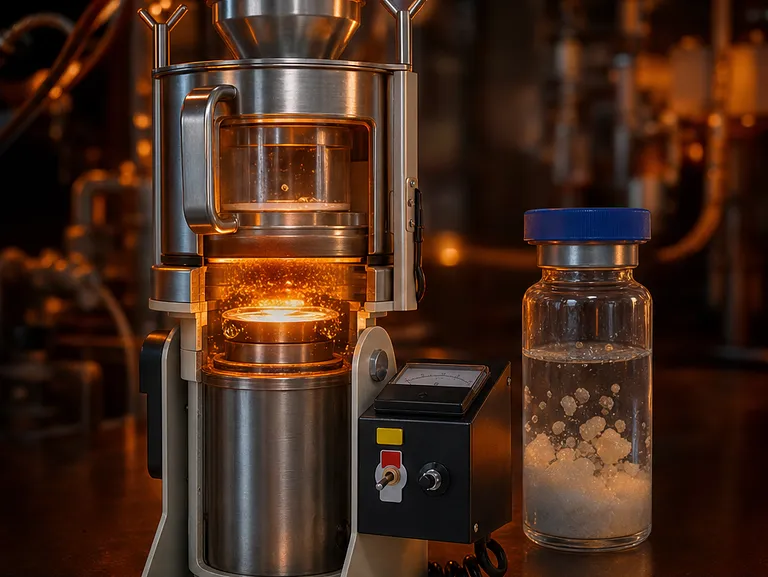
Extreme heat sensitivity and polymorphic fragility: When your API degrades at moderate temperatures or exhibits multiple closely-spaced polymorphs, choose a liquid nitrogen cryogenic grinder. It delivers deep, stable cold directly to the grinding zone, suppressing both chemical reactions and physical transitions.
-
Narrow thermal windows for process control: For APIs that require a tightly defined temperature band, a planetary ball mill with a jacketed cooling chamber and integrated temperature monitoring provides precision. Recirculating coolant absorbs heat continuously, keeping the suspension within a few degrees of the target.
-
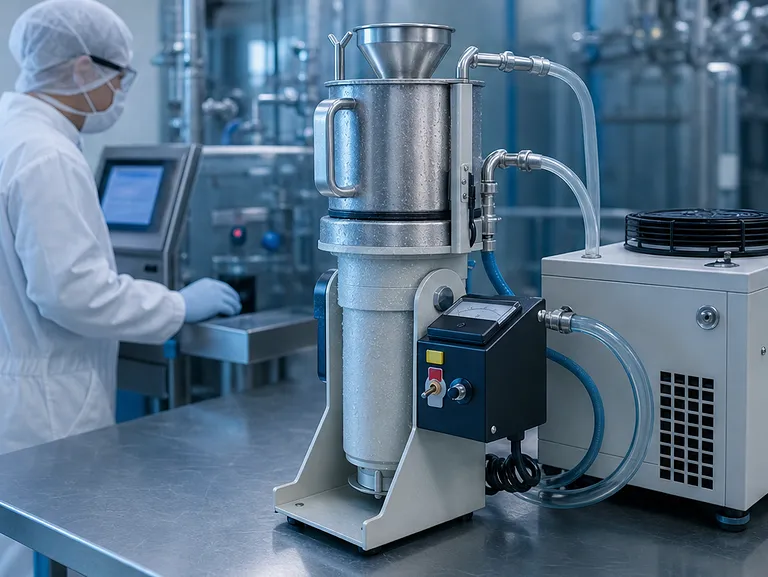
High-throughput continuous production: When the goal is sustained, high-volume milling, a high-capacity recirculating chiller coupled to a robust mill rapidly extracts process heat. This avoids thermal spikes during long runs and keeps the operation within safe thermal bounds.
The right equipment isn’t just a mill. It’s an integrated thermal management system. And it has to be designed from the ground up for the job.
Beyond the Mill: A Complete Sample Preparation Ecosystem
Milling doesn’t exist in isolation. Nanosuspension development typically flows through crushing, grinding, mixing, and eventually compaction for analysis or further processing. Each step has its own thermal sensitivities.
Our approach covers the full journey. Jaw and roll crushers break coarse materials without pre-heating sensitive structures. After milling, precision sieve shakers classify the product with minimal frictional heating. For formulations that require solid dosage forms, our hydraulic presses—including cold and warm isostatic presses—compact powders into uniform shapes without introducing unwanted thermal history.
Even the mixing stage matters. Powder mixers and defoaming mixers can be designed to operate at controlled temperatures, preserving the integrity you worked so hard to achieve in the mill.
The table below captures the thermal logic across key applications:
| Key Factor | Impact Without Cooling | Benefit of Integrated Cooling |
|---|---|---|
| Chemical Integrity | Thermal degradation, API decomposition | Halts degradation, maintains molecular purity |
| Physical Stability | Amorphous shifts, polymorphic transitions | Preserves intended crystalline structure |
| Process Consistency | Batch-to-batch variability, thermal spikes | Ensures repeatable, regulator-friendly processes |
| Operational Continuity | Forced stops due to overheating | Enables continuous high-intensity milling |
The Quiet Guardian of the Nanoscale
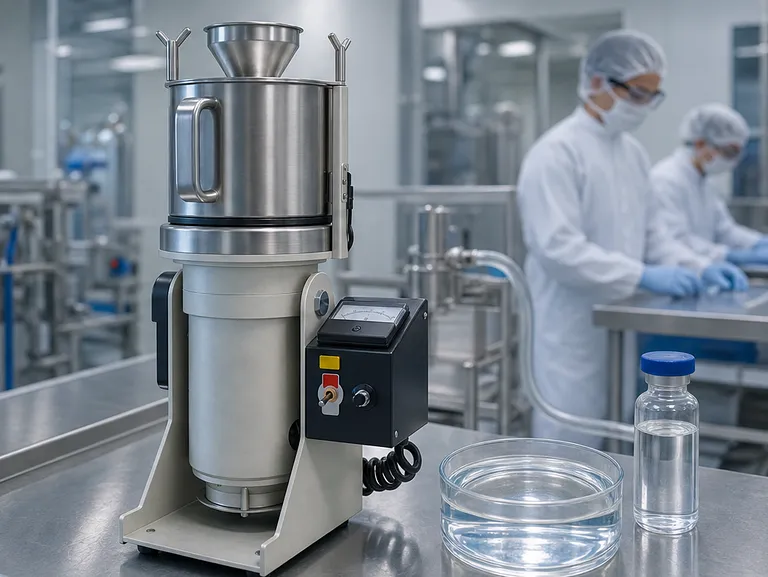
We romanticize the energy of the mill—the high RPM, the aggressive grinding media, the dramatic reduction in particle size. But what makes that energy useful is the system that absorbs its excess. The cooling jacket, the cryogenic circuit, the temperature sensor embedded in the chamber wall: these are the quiet guardians that transform a violent process into a precise one.
When a nanosuspension batch comes out clear, stable, and chemically intact, no one compliments the cooling system. That’s the point. It did its job without drama.
If your work involves heat-sensitive APIs, polymorphic control, or simply the need for flawless repeatability, the conversation should start not with the mill, but with the thermal architecture that surrounds it. The right engineering makes the invisible visible—and keeps your drug exactly where it belongs for patients who depend on it.
Quick Links
Suggested Products
Water Cooled Pulse Jet Ultra Fine Pulverizer for Continuous Grinding Cryogenic Liquid Nitrogen Grinder for DNA Analysis and Polymer Pulverization with Automatic Cooling and Electromagnetic Impact Technology Water Cooled Cryogenic Ultra Fine Cell Wall Breaking Mill Low Temperature Water Cooled Continuous Feed Grinder Two Stage Coarse and Fine Grinding System Water Cooled Graduated Continuous Feed Pulverizer for Industrial Powder Processing and Laboratory Material Preparation
PowderPreparation
Last updated on May 15, 2026
Related Products
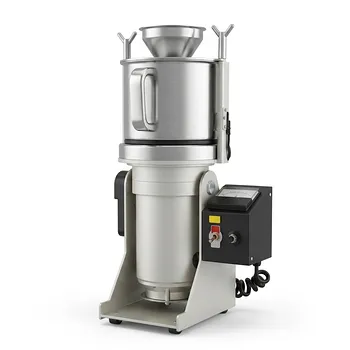
Water Cooled Pulse Jet Ultra Fine Pulverizer for Continuous Grinding
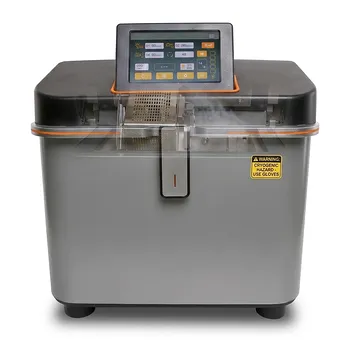
Cryogenic Liquid Nitrogen Grinder for DNA Analysis and Polymer Pulverization with Automatic Cooling and Electromagnetic Impact Technology
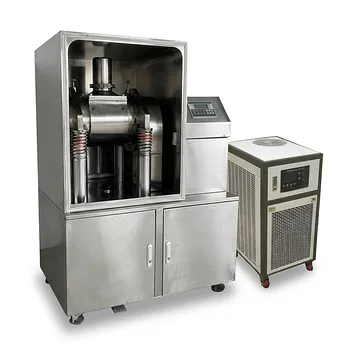
Water Cooled Cryogenic Ultra Fine Cell Wall Breaking Mill
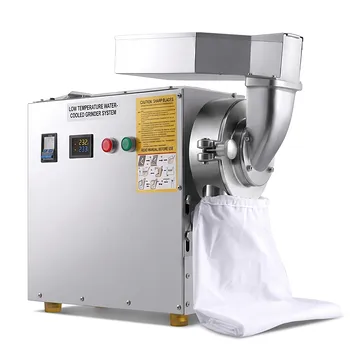
Low Temperature Water Cooled Continuous Feed Grinder Two Stage Coarse and Fine Grinding System
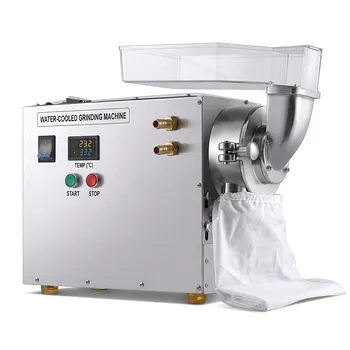
Water Cooled Graduated Continuous Feed Pulverizer for Industrial Powder Processing and Laboratory Material Preparation
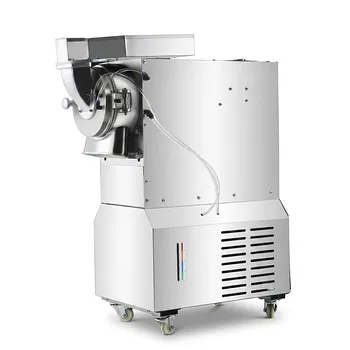
Water Cooled Continuous Feed Pulverizer Laboratory Grade Herb and Material Grinding System
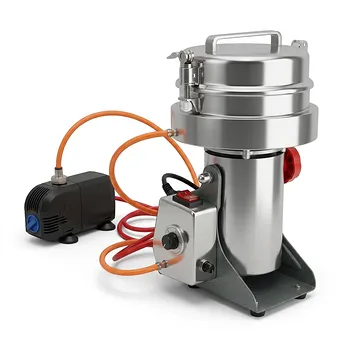
Water Cooled High Speed Grinder with Cryogenic Option for Laboratory Sample Preparation
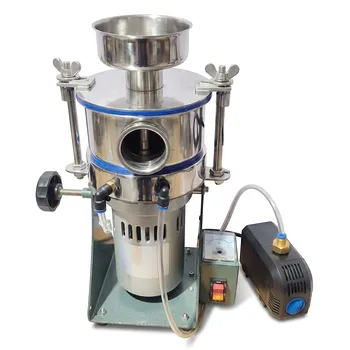
Water Cooled Airflow Ultra Fine Grinder for Low Temperature Material Processing
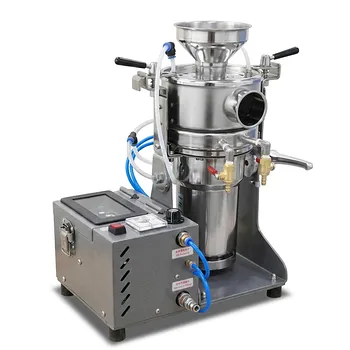
Water Cooled Pulse Jet Ultrafine Grinder
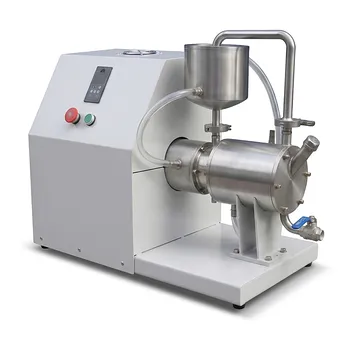
Laboratory Small Horizontal Sand Mill for Nano Materials Wet Grinding